Reviewed By: Dr. Solomon
Making the right choice among cataract surgery lens options is important, as the lens you select (known as an intraocular lens, or IOL) sets the baseline for your sight. Surgeons will always walk you through the options and provide a recommendation, but knowing the types of lenses for cataract surgery that align with your visual goals and day-to-day life activities can help you make the best possible decision and ensure a clear vision for years to come.
Table of Contents
What Is an Intraocular Lens (IOL) and How Does It Work?
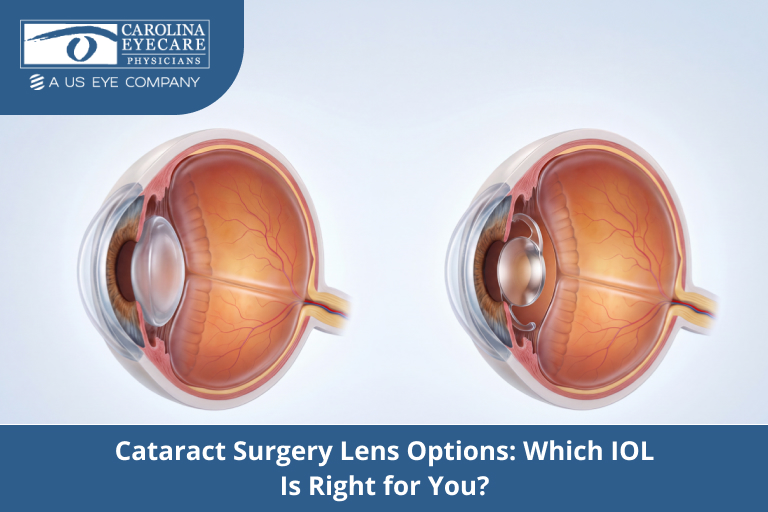
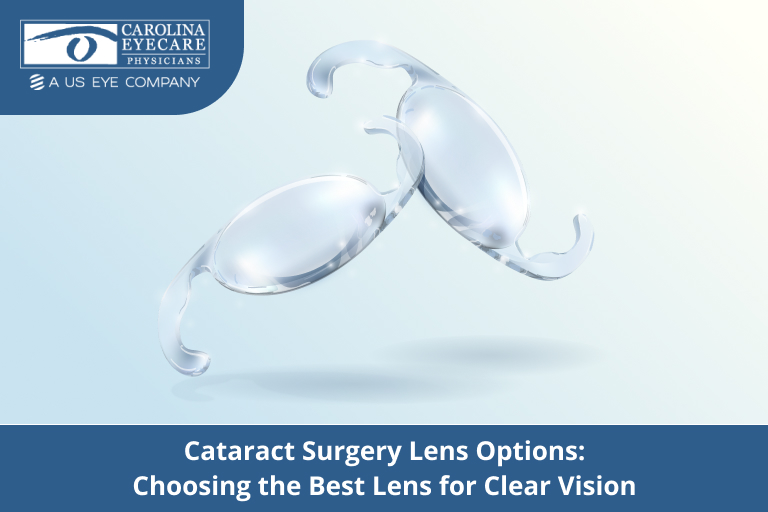
An intraocular lens, often called an IOL, is a small artificial lens placed inside the eye during cataract surgery to replace the cloudy natural lens. Once the cataract is removed, the IOL helps focus light properly on the retina so you can see more clearly.
IOLs come in different designs because every patient has different vision needs. Some lenses are designed mainly for distance vision, while others may help with astigmatism, intermediate vision, near vision, or a wider range of focus. That is why understanding the main intraocular lens types can make your cataract surgery discussion easier and more meaningful.
How Is an IOL Different from Your Natural Eye Lens?
Your natural lens changes shape when you are younger, helping your eyes shift focus between near and far objects. Over time, that lens can become cloudy from cataracts and less flexible with age. An IOL does not become cloudy like a cataract, and it is designed to provide a specific type or range of focus based on the lens selected before surgery.
What Are the Different Types of Cataract Surgery Lenses?
IOLs replace the cloudy natural lens. Depending on the intraocular lens types, they differ in what distance(s) they correct, how they handle astigmatism, and what visual effects some patients may notice (like halos or glare at night). When considering the options, it’s less about what’s “best” and more about what’s the “best fit.” Intraocular lens types vary to suit individual needs.

What Is a Monofocal IOL and Who Is It Best For?
A monofocal IOL is set for a single focal point, most commonly at distance. It’s the standard option and is typically covered by insurance. Depending on how it is targeted, it can provide crisp vision at distance, contrast that allows for night driving, and a long record of safety and predictability. The trade-off is that you’ll likely still need readers for close work, or distance glasses if the lens is targeted for near sight.
Who it suits: people who don’t mind wearing reading glasses; frequent nighttime drivers who prefer the fewest nighttime visual effects.
What Is a Toric IOL and Does It Correct Astigmatism?
A toric lens for cataract surgery corrects astigmatism, which is one of the most common, treatable focusing issues. Toric IOLs are available in most of the same varieties as non-toric lenses. When astigmatism is treated successfully, overall clarity sharpens, and the need for glasses is often reduced.
Who it suits: anyone with clinically meaningful corneal astigmatism. Measurements confirm candidacy.
What Is a Multifocal or Trifocal IOL?
These more premium IOLs split light in order to provide multiple focal points—near, intermediate, and distance (trifocals add the third focal point). Many patients report less day-to-day dependence on glasses for everyday tasks like reading menus, using a phone, and computer work.
PanOptix trifocal IOL, Tecnis Synergy, and similar lenses can significantly improve your quality of life with reduced dependence on reading glasses.
Trade-offs to consider: multifocal and trifocal lenses may increase the chance of halos, glare, or rings around lights, especially at night. Some patients adjust well over time, while others may find these symptoms more noticeable. Your surgeon will review whether your eye health and lifestyle make this type of lens a good fit.
What Is an EDOF Lens for Cataract Surgery?
An EDOF lens, or extended depth-of-focus lens, is designed to stretch the range of clear vision rather than create multiple separate focal points. This can help patients see well at distance and intermediate ranges, such as driving, viewing a dashboard, working on a computer, or seeing across a room.
Who it suits: active patients who prioritize distance and intermediate, do a lot of screen work, and are okay using light readers for fine print.
What Is a Light Adjustable Lens (LAL) for Cataract Surgery?
The Light Adjustable Lens can be fine-tuned in the office after your eye heals, using brief light treatments. That allows your surgeon to “lock in” a prescription you’ve tested in real life. It can also target monovision or mini-monovision if appropriate.
Considerations: requires protective UV-blocking glasses between adjustment visits and careful adherence to the adjustment schedule. Not every practice offers it, and candidacy depends on ocular health and lifestyle.
Monovision and mini-monovision: simple and effective, for some
Monovision sets one eye for distance and the other for near. “Mini-monovision” uses a smaller difference to keep depth perception more natural while reducing dependence on readers. Your surgeon may let you try this with contacts pre-op.
Who it suits: people who have tried and liked monovision in contacts or are open to a contact lens trial beforehand.
How Do You Choose the Right IOL for Your Cataract Surgery?
When thinking about what lens is right for you, consider the following factors:
Daily tasks – Do you read for long stretches? Do detailed crafts? Drive at night? Spend hours on a computer? List what matters most.
Tolerance for night effects – If halos or glare are unacceptable, discuss it early. Some lens designs are more night-friendly than others.
Astigmatism plan – Correcting astigmatism can sharpen any IOL’s performance. Ask whether a toric version or corneal relaxing incisions make sense for you.
Eyes as they are – Conditions like dry eye, corneal scars, macular disease, or glaucoma can affect candidacy for certain IOLs. Optimizing the ocular surface before surgery improves measurements and outcomes across the board.
Glasses philosophy – Some patients prefer the most glasses-free lifestyle; others are happy to wear readers for the most night-comfortable optics. There’s no wrong answer—only the one that fits you.
What Lifestyle Factors Affect Your IOL Choice?
Your daily lifestyle plays a major role in choosing the right IOL. A person who drives frequently at night may have different needs than someone who spends long hours reading, sewing, using a phone, or working at a computer. Before your consultation, think about the activities where you want the clearest vision and the situations where wearing glasses would bother you most.
What Questions Should You Ask Your Surgeon Before Choosing an IOL?
Before choosing an IOL, ask your surgeon:
- Which lens options match my eye health and vision goals?
- Will I still need glasses for reading, driving, or computer work?
- Do I have astigmatism that should be corrected during surgery?
- Am I a candidate for premium lenses such as toric, multifocal, EDOF, or LAL?
- What nighttime symptoms, such as halos or glare, should I expect?
- What costs are covered by insurance, and what would be out of pocket?
These questions can help you compare lens benefits, costs, and realistic expectations before making a final decision.
How Much Do Cataract Surgery Lens Options Cost? (With Insurance Breakdown)
- Standard Monofocal: Typically covered by Medicare and insurance.
- Premium IOLs: Toric, multifocal, EDOF, and Light Adjustable Lenses (LAL) are out-of-pocket upgrades, typically ranging from $1,000–$2,600 per eye.
Does Insurance or Medicare Cover Cataract Surgery Lens Implants?
Insurance and Medicare usually help cover medically necessary cataract surgery, including cataract removal and a standard monofocal intraocular lens. However, premium lens upgrades such as toric, multifocal, trifocal, EDOF, or Light Adjustable Lenses may involve additional out-of-pocket costs because they offer advanced vision-correction benefits beyond basic cataract removal.
Patients should confirm coverage details with their insurance provider before surgery so they understand what is covered and what premium lens costs may apply.
How Much Does Each Type of IOL Cost? Price Breakdown
The total cost depends on the lens type, surgeon’s recommendation, insurance coverage, surgical facility, and whether advanced measurements or technology are included. A general breakdown may look like this:
- Monofocal IOL: Usually covered when cataract surgery is medically necessary
- Toric IOL: Often involves an added out-of-pocket cost for astigmatism correction
- Multifocal or trifocal IOL: Typically considered a premium upgrade
- EDOF IOL: Usually an out-of-pocket premium lens option
- Light Adjustable Lens: Often one of the higher-cost options because it includes post-surgery adjustment treatments
Cataract Surgery Lens Options at a Glance
Intraocular lens types offer varying benefits, costs, and effects. Here’s a quick comparison:
| Lens Type | Best For | Glasses After? | Insurance Covered? | Night Effects? |
| Monofocal | Distance, standard choice | Likely needed | Yes | Low |
| Toric | Astigmatism correction | Likely needed | Yes | Moderate |
| Multifocal | Near, intermediate, and distance vision | Minimal | No | High (Glare/Halos) |
| EDOF | Distance and intermediate vision | Light readers | No | Moderate |
| LAL | Customizable focus after surgery | Minimal | No | Moderate |
Who May Not Be a Candidate for Premium IOLs?
Some patients may not be ideal candidates for premium IOLs due to underlying conditions that affect the eye’s ability to heal or adjust to new lenses. These include:
- Macular degeneration: A condition that affects the central vision.
- Advanced glaucoma: High eye pressure or optic nerve damage can complicate cataract surgery.
- Severe dry eye: Insufficient tear production may impact the healing process and lens effectiveness.
What Can You Expect After Cataract Surgery with an IOL?
After cataract surgery, many patients notice brighter, clearer vision as the eye heals. Colors may appear more vivid, and cloudy or hazy vision often improves. However, your exact experience depends on your eye health, the type of IOL selected, and whether both eyes are being treated.
Some patients see improvement within a few days, while others need more time for the brain and eyes to adjust, especially with multifocal, EDOF, monovision, or Light Adjustable Lens options. Mild glare, halos, dryness, or fluctuating vision can happen during the early healing period and should be discussed with your surgeon if symptoms feel unusual or persistent.
How Long Does It Take to Adjust to a New IOL?
Adjustment time varies by lens type. Many patients adapt quickly to a monofocal lens, while premium lenses may require a longer neuro-adaptation period as the brain learns how to use the new range of vision. This adjustment may take days, weeks, or in some cases a few months.
Following your post-operative instructions, using prescribed eye drops, attending follow-up visits, and reporting any vision changes can help your surgeon monitor healing and make sure your new IOL is performing as expected.
What to expect at a consult
Your evaluation at Carolina Eyecare includes detailed measurements of the cornea and eye length, a health check of the retina and optic nerve, and a discussion about how you use your vision. From there, the surgeon will outline one or two cataract surgery lens options that fit your priorities, noting likely glasses needs and any nighttime visual effects to consider. You’ll leave with a clear recommendation and time to think before scheduling.
FAQs
Which lens gives the “best” vision?
“Best” depends on goals. Monofocals excel at one distance with fewer night effects; EDOF and multifocals broaden the range with a higher chance of halos or glare. Your surgeon will match the design to your priorities and eye health
Will I still need glasses after surgery?
Possibly. Monofocals usually need readers for close work. EDOF and multifocals can reduce the need for glasses for many tasks, but fine print or dim lighting may still call for readers. Toric IOLs reduce the need for glasses for distance vision when astigmatism is corrected.
I’m a frequent night driver—what should I pick?
Many night drivers favor monofocal (often with astigmatism correction if needed) for contrast and fewer nighttime effects. Your surgeon will review trade-offs if you want a wider range without glasses.
What if I have dry eye or other eye conditions?
Surface dryness can blur measurements and early vision. Treating dry eye before surgery helps any IOL perform better. Some retinal or optic nerve conditions limit candidacy for multifocal designs.
Can lenses be mixed between eyes?
Yes. Some patients do well with EDOF in one eye and monofocal in the other, or with mini-monovision. Your surgeon may simulate the plan with a contact lens trial.
Is the Light Adjustable Lens right for everyone?
No. It requires multiple adjustment visits and strict UV-protection between them. It’s a good fit for patients who value post-op fine-tuning and can follow the schedule.
How Long Do Cataract Lenses Last?
IOLs are permanent, lasting a lifetime. Once they are implanted, they do not need to be replaced unless there’s a complication.