Reviewed By: Dr. Hunter
Most people want two clear timelines: the minutes in the operating room and the weeks of healing that follow. Cataract surgery is brief, and the visit typically includes check-in, preparation, and a short recovery period. Vision often sharpens quickly, with full healing over the next several weeks.
Understanding the cataract surgery timeline can help patients feel prepared for each step, from the procedure itself to the cataract surgery recovery time afterward.
Table of Contents
The procedure, step by step
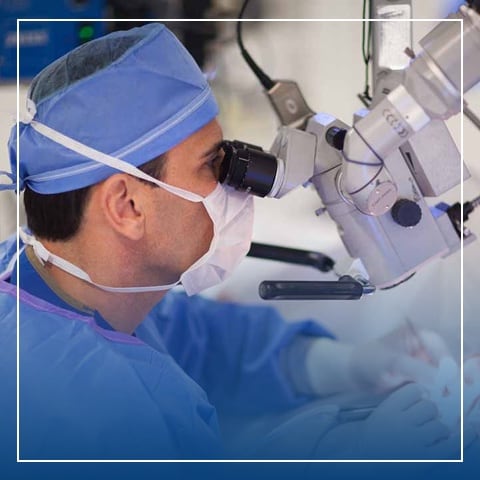
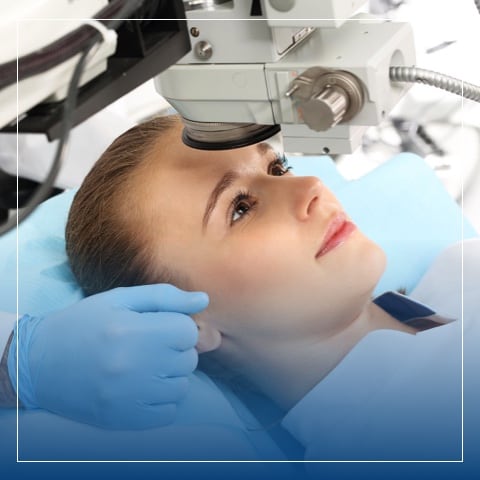
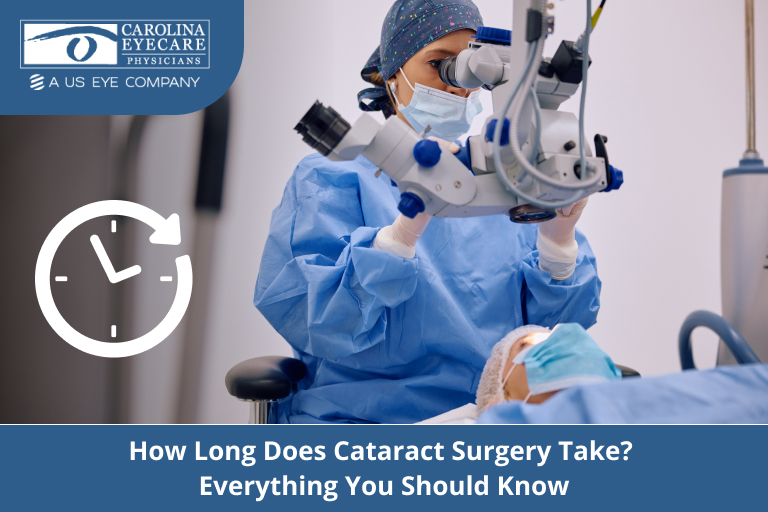
How long does cataract surgery take? For uncomplicated cases, cataract surgery typically lasts 10 to 30 minutes, with most procedures finishing closer to 15 minutes. The eye is numbed, light sedation eases anxiety, and the patient remains awake. Through a tiny incision, the surgeon softens and removes the cloudy lens, then places a clear intraocular lens. A protective shield covers the eye before discharge.
In sequence:
- Numbing drops or a small local injection
- Tiny corneal incision
- Ultrasound to break up and remove the cataract (phacoemulsification)
- Intraocular lens placement
- Protective shield and post-op review
Time at the surgery center
Although the operation is brief, plan on spending two to three hours on site. That window covers check-in, dilation, measurements, anesthesia review, the procedure itself, brief monitoring, and post-operative instructions before going home.
Ready to explore advanced cataract treatment options? Learn more about Laser Cataract Surgery and discover how modern technology can support a more personalized surgical experience.
Schedule Your Cataract Evaluation to discuss your vision goals and determine the best treatment approach for your eyes.
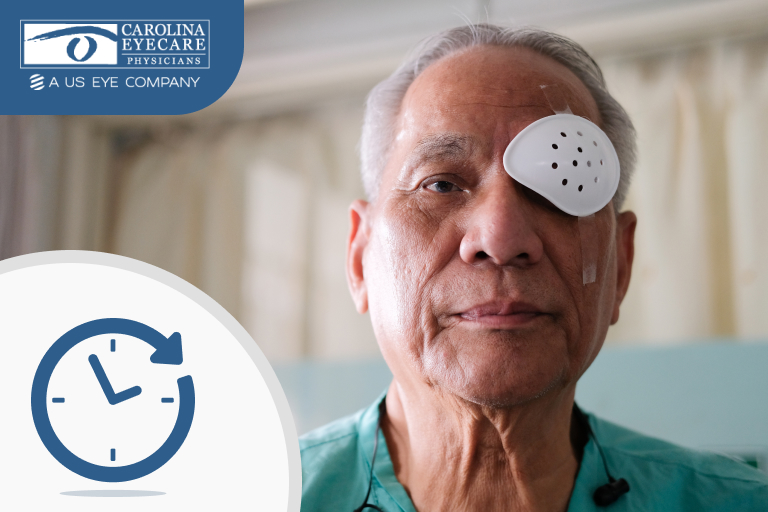
How long does it take to recover from cataract surgery?
Vision often improves within the first day or two, although mild blur is common as the eye settles. Most routine activities resume within several days if the surgeon agrees. Driving, heavier tasks, and exercise return in stages. The typical cataract surgery recovery time runs four to eight weeks.
A practical recovery timeline
First 24–48 hours
- Brighter colors and crisper outlines are common.
- Mild scratchiness, tearing, or a “gritty” feel may appear.
- Shield stays on as directed, and prescribed drops begin.
Days 2–7
- Desk work or light duties are often reasonable if the first check is stable.
- Avoid heavy lifting, bending that puts pressure on the eyes, dusty work, and direct contact with water in the eyes.
Weeks 2–4
- Gentle exercise usually restarts; intensity increases with clearance.
- Swimming and hot tubs typically wait two to four weeks to reduce the risk of infection.
Weeks 4–8
- The eye reaches a more stable focus.
- If glasses are needed, a new prescription is often set around the one-month visit.
Once you understand the expected recovery stages, the next step is choosing the right care team. Schedule Your Cataract Evaluation with Carolina Eyecare Physicians to discuss your options and create a personalized treatment plan.
How long does it take for cataract surgery to heal
Surface tissues close quickly, but deeper layers continue to recover for several weeks. Most patients reach a stable result by one to two months. Healing can take longer if the cataract was very dense or if other conditions are present.
Why some procedures take longer
- Cataract density. Firmer lenses may need more time.
- Other eye conditions. Prior surgery, corneal disease, or weak lens support can change the approach.
- Lens selection. Astigmatism-correcting or other advanced lenses require additional planning.
- Intra-operative adjustments. Uncommon events may extend the case.
Simple habits that support healing
- Use prescribed drops on schedule.
- Keep the shield on as directed, especially during sleep.
- Avoid rubbing the eye.
- Skip heavy lifting and high-impact workouts in the first week.
- Hold swimming and hot tubs for several weeks.
- Protect the surface from dust and wind until it is stable.
Follow-up care
Typical checkpoints occur at 24–48 hours, approximately one week, and around one month. These visits confirm pressure, clarity, and healing, and they determine the timing of any update to glasses.
When to call the clinic
A sudden drop in vision, significant pain, flashes of light, a surge of floaters, or persistent redness and discharge warrant prompt attention.
If you experience any concerning symptoms after cataract surgery, contact Carolina Eyecare Physicians directly for guidance from our care team.
The bottom line
How long does cataract surgery take? In most cases, 10 to 30 minutes. The full visit runs two to three hours, and how long it takes to recover from cataract surgery depends on the eye’s baseline health and the complexity of the case. Many people return to their regular routines within several days, with full healing occurring in four to eight weeks. Asking how long it takes for cataract surgery to heal is essentially asking when vision feels settled and reliable again; for typical cases, this happens within the first two months. Clear instructions, steady drop use, and on-time follow-ups keep the process smooth.
Care at Carolina Eyecare
Cataract evaluations include measurements, lens counseling, and a personalized plan tailored to meet daily needs. Scheduling, prep instructions, and follow-up visits are laid out in plain language so each step is easy to follow.
Ready to take the next step toward clearer vision? Schedule Your Cataract Evaluation today to connect with Carolina Eyecare Physicians and discuss your personalized cataract treatment options.