
Protect Your Eyes with Adult Eye Exams
Eye exams are an essential component of overall wellness. During a comprehensive eye exam, your doctor will assess much more than your visual acuity. He or she will test for common eye diseases, assess how your eyes work together and evaluate the health of your retina, optic nerve and retinal blood vessels.
Comprehensive adult eye exams actually offer an accurate indication of your overall health because ophthalmologists are often the first healthcare professionals to detect chronic conditions such as hypertension and diabetes.
Visit the Carolina Eyecare Physicians eye exams center for specialized senior eye care.
When Should You Book an Eye Exam?
The American Optometric Association (AOA) recommends adults (18-64) have comprehensive eye exams:
- At least every 2 years for low-risk patients
- At least once annually for higher-risk patients
For seniors (age 65+), the AOA recommends annual eye exams. However, seniors with eye problems or a higher risk of eye conditions may benefit from more frequent examinations.
Patients can also visit their optometrist for common eye care needs. For example, your optometrist can diagnose and treat eye infections like conjunctivitis (pink eye). You can also visit us for optical wear and contact lens fittings.

What Happens During an Eye Exam
If it’s been several years since your last exam, you may wonder what is involved in getting a comprehensive eye exam. While tests will vary based on your doctor and your medical history, most comprehensive eye exams include the following tests:
- Visual acuity to assess the sharpness of your vision, usually using the “Big E” or Snellen chart.
- Visual fields test to determine if you have blind spots or peripheral vision issues.
- Cover test, which can identify strabismus or binocular vision problems.
- Retinoscopy, autorefractor or aberrometer to approximate your eyeglass prescription.
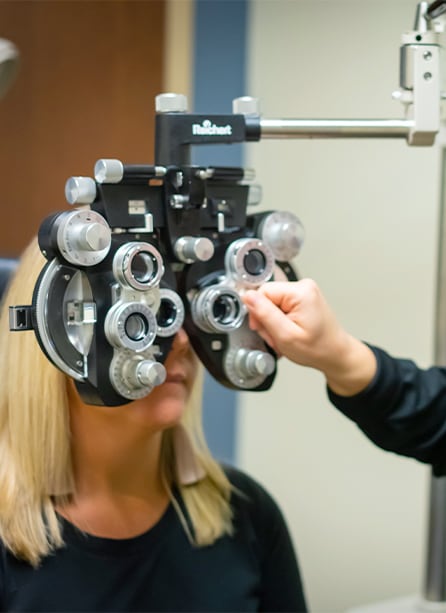
- Refraction to fine tune the final eyeglass prescription using a phoropter.
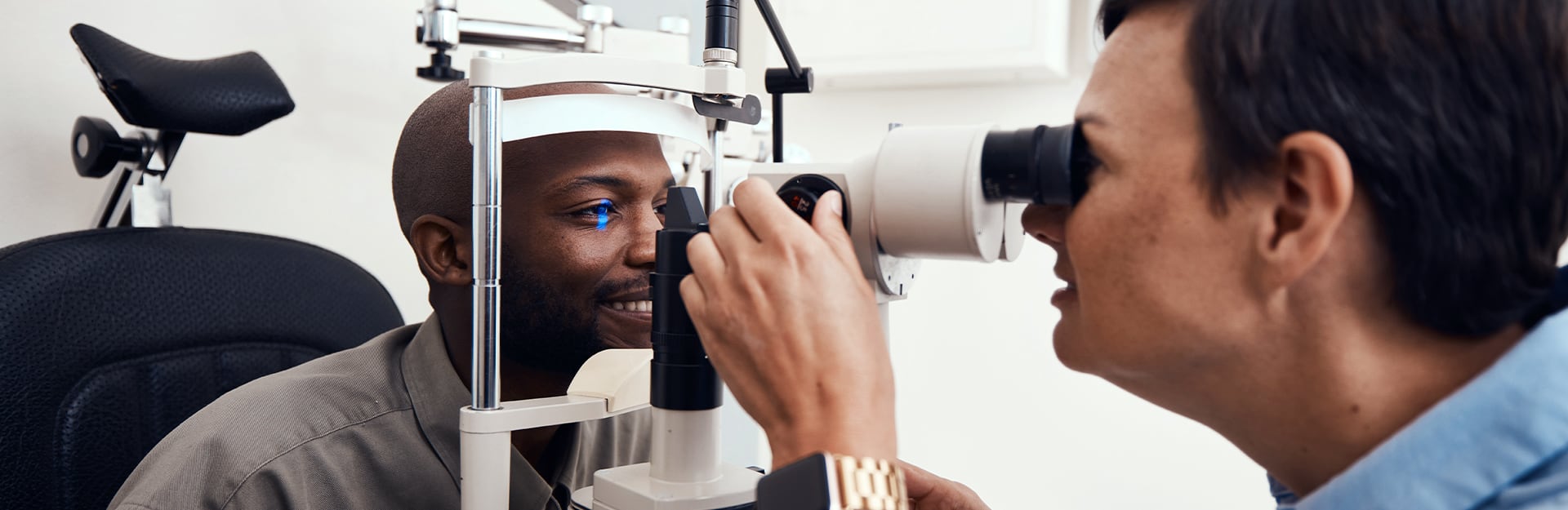
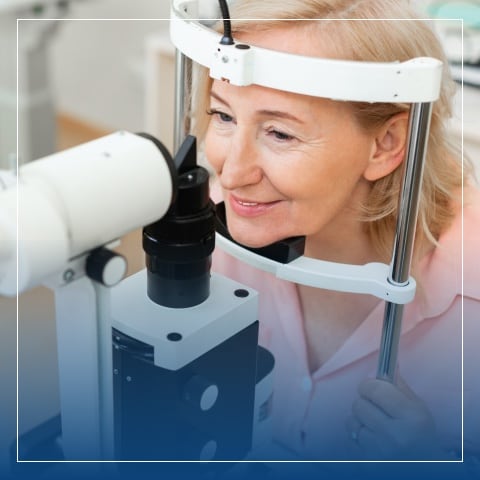
- Slit lamp exam to detect common eye diseases and conditions. This instrument allows your doctor to examine the structure of your eye to assess its health.
- Glaucoma test, known as tonometry, measures the pressure within your eye.
- Dilation of the pupil and ophthalmoscopy to examine the optic nerve, retina and blood vessels.
What are the Benefits of a Comprehensive Eye Exam?
One of the greatest benefits of comprehensive eye exams is that you receive immediate feedback about your eye health. Your ophthalmologist or optometrist will test for conditions such as:
- Refractive errors: nearsighted, farsighted or astigmatism
- Focusing problems, including presbyopia
- Other vision problems, such as amblyopia or binocular vision
Possibly the best advantage of routine comprehensive eye exams is prevention. Nothing is as precious as your eyesight, and healthy vision requires regular maintenance. Neglecting preventative vision care can have lasting consequences when it comes to degenerative eye disease.
Certain diseases such as glaucoma, macular degeneration, and diabetic retinopathy have no symptoms in the early stages and can develop slowly and painlessly. If left untreated, the vision loss is usually irreversible. Seeing your eye doctor on a regular basis can protect your vision through early treatment. Another significant benefit of early diagnosis and early treatment is reduced medical cost. Identifying eye disease in the early stages will save you thousands of dollars in treatment and help preserve your vision as well as your quality of life.
Make Healthy Vision a Priority
Protecting your eye health is essential for clear vision. At Carolina Eyecare Physicians, we’re dedicated to delivering compassionate, trusted care to help our patients protect and preserve their sight. Book an appointment today for an adult or senior’s eye exam at our eye care family vision center.
Frequently Asked Questions
What exactly happens during an adult or senior eye exam at your clinic?
During a comprehensive adult eye exam at our Eye Exams Center, we check more than just your eyesight. We examine the internal and external structures of your eyes, test visual acuity and eye pressure, and may use a dilated fundus exam to check the retina and optic nerve. This full evaluation helps us catch early signs of conditions like glaucoma, cataracts, or age-related macular degeneration before they cause noticeable symptoms.
How often should I get senior eye care if I’m over 65?
Once you’re over 65, we generally recommend a full senior eye care check-up every year. That ensures we monitor your eye health closely, since risks for cataracts, glaucoma, and other age-related issues tend to increase with time.
I feel my vision is fine do I still need adult eye exams?
Yes, many serious eye conditions develop slowly and without obvious symptoms. Regular adult eye exams let us spot these early changes, long before they affect your daily vision.
Can an eye exam at an Eye Exams Center also tell me about my general health, not just vision?
Absolutely. A thorough exam often reveals signs related to overall health, such as high blood pressure, diabetes, or circulation issues, because our eyes can show changes in blood vessels, nerves, and the retina long before symptoms appear elsewhere.
Why choose your Eye Care Family Vision Center for my senior eye care needs rather than waiting for symptoms?
Because our Eye Care Family Vision Center is set up to treat you proactively, we tailor the exam to your age, health history, and risk factors. By catching problems early, we help preserve your eyesight, prevent complications, and give you peace of mind.
Locations
We have several convenient locations throughout South Carolina. Please view the nearest location to you or get directions below.
Our Services

News
Cataract Surgery Lens Options: Which IOL Is Right for You?
Cataract SurgeryReviewed By: Dr. Peter B. Knowlton Summary Cataract eye surgery replaces the eye’s cloudy natural lens with an artificial intraocular lens, or IOL. Available options include monofocal lenses, toric correction for astigmatism, multifocal or trifocal lenses, extended depth-of-focus lenses, and the Light Adjustable Lens. The right choice depends on your eye health, visual priorities, comfort […]
Read More… from Cataract Surgery Lens Options: Which IOL Is Right for You?
How Often Should Diabetics Get an Eye Exam? A Year-by-Year Guide
Diabetic Eye ExamsReviewed By: Susan DiSario, OD. Summary Most adults with diabetes need regular comprehensive dilated eye exams, but the starting point depends on the type of diabetes. Adults with Type 1 diabetes should generally have their first exam five years after diabetes begins. People with Type 2 diabetes should be examined at diagnosis. After the first […]
Read More… from How Often Should Diabetics Get an Eye Exam? A Year-by-Year Guide
Cornea Transplant Recovery: What to Expect Week by Week
cornea careReviewed By: Dr. Cole Miliken, MD Summary Cornea transplant recovery is gradual. Some patients notice improvement within weeks, while others need many months for vision to stabilize. The timeline depends on the type of transplant, the reason for surgery, your eye health, and how closely you follow your postoperative instructions. More than 47,000 corneal transplants […]
Read More… from Cornea Transplant Recovery: What to Expect Week by Week
Cataract Surgery Lens Options: Which IOL Is Right for You?
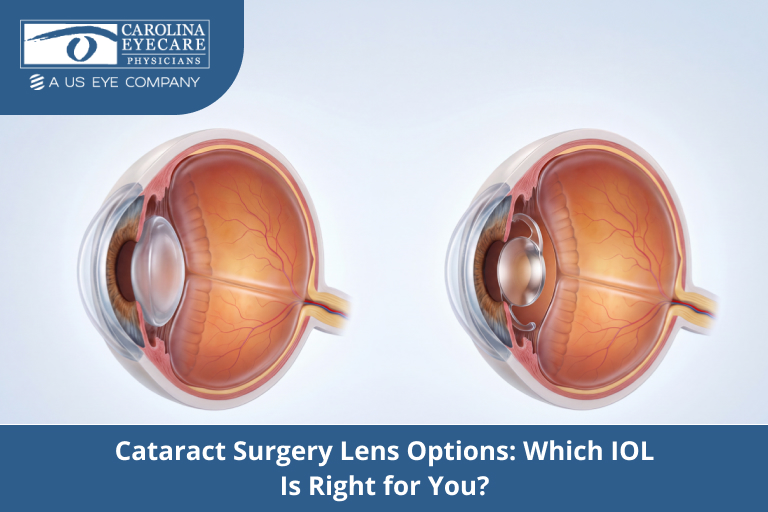
Reviewed By: Dr. Peter B. Knowlton Summary Cataract eye surgery replaces the eye’s cloudy natural lens with an artificial intraocular lens, or IOL. Available options include monofocal lenses, toric correction for astigmatism, multifocal or trifocal lenses, extended depth-of-focus lenses, and the Light Adjustable Lens. The right choice depends on your eye health, visual priorities, comfort […]
Read More… from Cataract Surgery Lens Options: Which IOL Is Right for You?
How Often Should Diabetics Get an Eye Exam? A Year-by-Year Guide

Reviewed By: Susan DiSario, OD. Summary Most adults with diabetes need regular comprehensive dilated eye exams, but the starting point depends on the type of diabetes. Adults with Type 1 diabetes should generally have their first exam five years after diabetes begins. People with Type 2 diabetes should be examined at diagnosis. After the first […]
Read More… from How Often Should Diabetics Get an Eye Exam? A Year-by-Year Guide
Cornea Transplant Recovery: What to Expect Week by Week
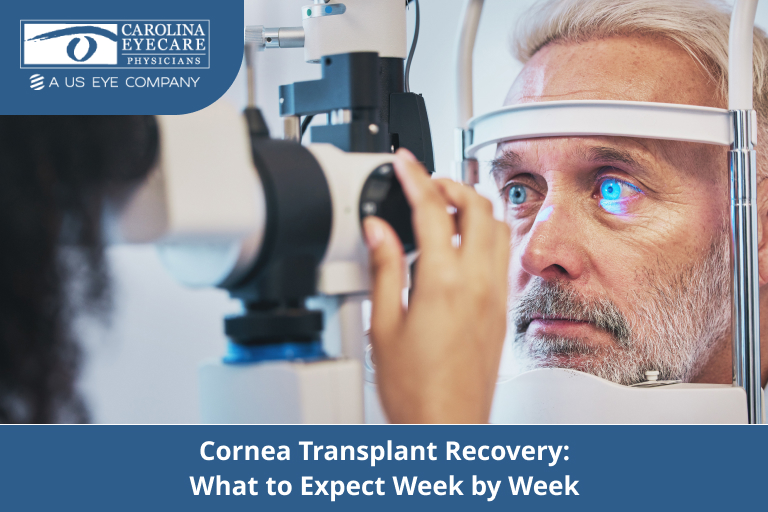
Reviewed By: Dr. Cole Miliken, MD Summary Cornea transplant recovery is gradual. Some patients notice improvement within weeks, while others need many months for vision to stabilize. The timeline depends on the type of transplant, the reason for surgery, your eye health, and how closely you follow your postoperative instructions. More than 47,000 corneal transplants […]
Read More… from Cornea Transplant Recovery: What to Expect Week by Week


We are a proud partner of US Eye, a leading group of patient-centric, vertically integrated multi-specialty physician practices providing patients with care in ophthalmology, optometry, dermatology, audiology, and cosmetic facial surgery.