
Reviewed By: Dr. Elliot
For many, itchy, watery, red eyes are more than a minor annoyance. These are the classic signs of allergic conjunctivitis, or what’s more broadly referred to as eye allergies. Understanding what causes eye allergies and recognizing the signs early can help keep symptoms manageable while protecting long-term eye health.
Table of Contents
What causes eye allergies?
Eye allergies happen when the immune system overreacts to a trigger (in this case, an allergen) on the ocular surface. Cells in the conjunctiva release histamine and other mediators, dilating the small blood vessels and triggering symptoms such as itching, redness, tearing, and swelling.
The most common causes of eye allergies fall into a few categories:
- Outdoor allergens (seasonal): Tree, grass, and weed pollens—these often peak from spring through fall.
- Indoor allergens (year-round): Dust mites, pet dander, indoor molds—often worse in closed-up, heated, or air-conditioned spaces.
- Irritants (not always a “true” allergy): Cigarette smoke, fragrances, cleaning sprays, and diesel exhaust can mimic or magnify symptoms.
- Personal factors: A family history of allergies (atopy), coexisting hay fever or asthma, and dry eye can all increase reactivity.
What eye allergy symptoms look like
Most patients notice a cluster of symptoms that can flare quickly:
- Itching and burning
- Redness and watering
- Puffy lids and a filmy or stringy discharge
- Light sensitivity and a gritty or sandy feeling
- Dark under-eye circles (“allergic shiners”) with long-standing allergy
Avoid rubbing, as this drives further histamine release and can lead to corneal surface injury.
Why early check-ups matter
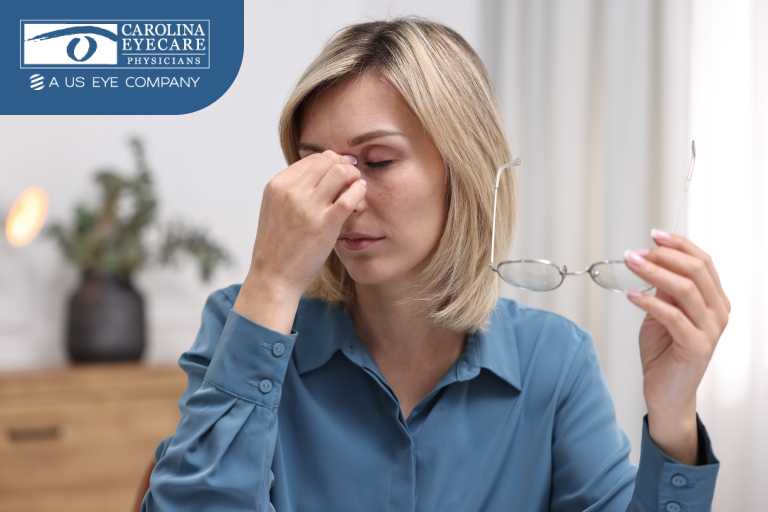
Over-the-counter drops can help alleviate symptoms, but an eye exam is the fastest route to a correct diagnosis and a personalized treatment plan.
- Rule-outs: Allergies can mimic symptoms of dry eye, blepharitis, or infection. Your doctor can distinguish them and look for complications such as corneal irritation.
- Targeted therapy: Knowing the trigger and severity lets you use the right tools.
- Prevention: Uncontrolled inflammation can worsen contact lens tolerance, aggravate dry eye, and, in severe forms such as vernal or atopic keratoconjunctivitis, threaten the corneal surface. Early control prevents escalation.
What helps right now (and what to avoid)
Simple steps often reduce day-to-day symptoms:
- Rinse and protect: Use saline rinses after outdoor time. Wear sunglasses or wraparound eyewear on high-pollen, windy, or dusty days.
- Reduce exposure: Keep windows closed during peak pollen season; change HVAC filters regularly; use protective pillowcase covers; wash your hands after pet contact.
- Cool compresses: A clean, cool compress can ease itching and swelling.
- Eye-safe drops: Preservative-free lubricating drops add a protective tear layer and dilute allergens.
Skip redness-only “get-the-red-out” drops as a long-term solution—they can cause rebound redness and don’t treat the allergic cascade.
Treatment options your doctor might recommend
Management is tailored to severity, triggers, and other eye conditions:
- Antihistamine/mast-cell stabilizer drops (often combined in one bottle) for rapid relief and ongoing prevention.
- Short courses of mild steroid drops for significant flares (with medical supervision).
- Allergy care coordination for stubborn, year-round symptoms—topical therapy at the eyes plus systemic allergy strategies (and, when appropriate, referral for testing or immunotherapy).
- Contact lens guidance: Use daily disposables during peak seasons, lens-compatible lubricants, and follow clear “no-wear” rules during flare-ups or infections.
Are foods a factor?
Patients sometimes ask what food causes eye allergies. Classic eye allergy is usually airborne (pollen, dander, dust). True food allergy more often causes skin, GI, or systemic symptoms; isolated itchy, red eyes from foods are uncommon. That said, histamine-rich foods or alcohol can occasionally magnify existing ocular allergy. If you notice a consistent link between food and symptoms, discuss it. Keeping a brief diary can help in this regard.
When to call
Seek care quickly if you have any of the following:
- Pain, light sensitivity, or reduced vision
- Thick discharge (especially in one eye) that suggests infection
- A contact lens wear–related flare that doesn’t settle after removing lenses
- Symptoms that persist despite using appropriate allergy drops and avoidance strategies
The bottom line
If itchy, watery eyes are becoming a pattern, schedule a comprehensive evaluation with Carolina Eyecare. Our doctors separate allergies from look-alike conditions, identify your specific triggers, and build a plan that’s tailored for you. Book an appointment and get a precise diagnosis, so you can get back to clear, comfortable vision.
FAQs
What are the most common causes of eye allergies?
Tree, grass, and weed pollens outdoors; dust mites, pet dander, and mold indoors; and irritants like smoke or fragrance. A family history of allergies and dry eye can increase susceptibility.
Is a corneal scratch the same as an eye allergy?
No. Allergies inflame the surface tissue; a corneal abrasion is a physical scratch. Allergies can tempt you to rub, which raises the risk of an abrasion—another reason to avoid rubbing and use cool compresses instead
What’s the best over-the-counter drop for eye allergies?
Look for antihistamine/mast-cell stabilizer drops labeled for allergic itch, and preservative-free lubricating drops for comfort. Avoid chronic use of “redness relief only” vasoconstrictors.
Can contact lenses make eye allergies worse?
They can. Lenses can trap allergens on the eye and reduce tear exchange. Daily disposable lenses, more frequent lubrication, and taking a break during flares usually help.
Do foods cause eye allergies?
Most ocular allergies are airborne. Foods rarely cause isolated eye symptoms, though alcohol or histamine-rich foods can amplify an existing flare in some people. Track patterns and discuss with your doctor if you notice a consistent link.
How are eye allergies different from an eye infection?
Allergies typically itch and affect both eyes. Bacterial infections often produce thicker discharge and more localized soreness. If you experience pain, light sensitivity, or a sudden drop in vision, get examined promptly.
When should I see an eye doctor for allergies?
If symptoms persist more than a few days, interfere with contacts or daily activities, or include pain, light sensitivity, or vision changes—book an exam.
What are the causes of eye allergies in winter?
Indoor allergens (dust mites, pet dander, mold) and dry, heated air are common winter triggers. Humidification, filtration, and regular cleaning, alongside the right drops, help.