Reviewed By: Dr. Vanderah
If you have astigmatism, you know the frustration of blurry or distorted vision. Maybe you’ve squinted through a presentation, struggled to read street signs at night, or felt your eyes tire after an hour at your desk. The good news is that modern contact lenses for astigmatism can effectively correct the issue, providing sharp vision at all distances without the limitations of glasses.
Not all contact lenses are created equal. With options ranging from soft toric lenses to rigid gas-permeable designs, choosing the right fit depends on the severity of your astigmatism, your lifestyle, and your comfort preferences.
Table of Contents
Understanding Astigmatism and Why It Needs Special Lenses
Astigmatism occurs when your cornea or lens has an irregular curve, giving it a shape more like an American football than the preferred basketball shape. This uneven curvature causes light to focus on multiple points rather than a single spot on your retina, resulting in blurred or distorted vision at all distances. About one in three adults experiences noticeable astigmatism, according to the American Academy of Ophthalmology. Common symptoms include blurry vision, eye strain, headaches, and difficulty driving at night due to halos or glare around lights.
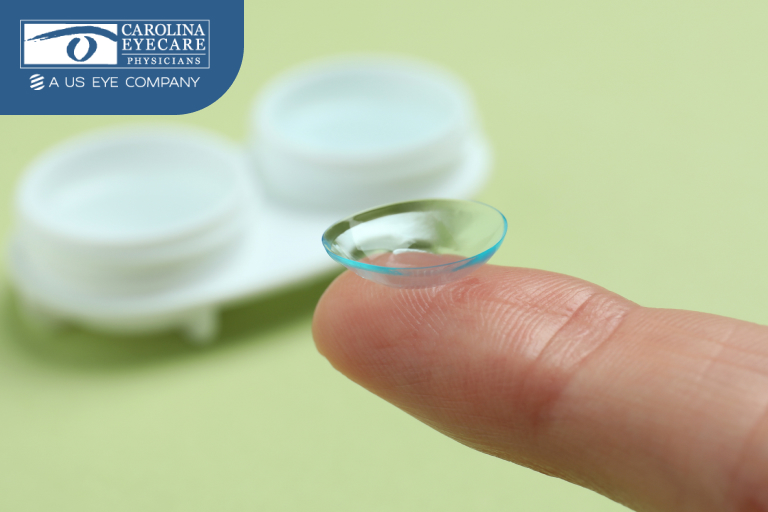
Standard spherical contact lenses can’t correct this irregular shape. That’s where specialized designs come in. Toric contact lenses feature two different curves to match the football-like shape of your eye, providing the precise correction your vision needs.
Types of Contact Lenses for Astigmatism
Soft Toric Contact Lenses
Soft toric lenses are the most popular choice for astigmatism correction. These lenses use a unique dual-curvature design to address the irregular shape of your cornea, with different refractive powers on the vertical and horizontal axes.
How they stay in place: Toric lenses must maintain a specific orientation on your eye to work properly. Manufacturers use several stabilization methods:
- Prism ballast or peri-ballast: A slightly thicker zone at the bottom of the lens uses gravity to keep it positioned correctly
- Blink stabilization: Advanced designs like ACUVUE’s BLINK STABILIZED technology work with your eyelids to realign the lens with every blink, maintaining clear vision even during head tilts and eye movements
- Thin-thick zones: Strategic thickness variations help anchor the lens
- Truncation: Some lenses have a slightly flat edge at the bottom for added stability
Available schedules: Daily disposables (wear once and discard), two-week, and monthly replacement options.
Best for: People with mild to moderate astigmatism who want comfort and convenience. Soft toric lenses adapt quickly, making them ideal for new contact wearers or those with an active lifestyle.
Rigid Gas Permeable (RGP) Lenses
RGP lenses are firm, durable lenses that create a smooth refractive surface over your irregular cornea. While they require a longer adjustment period than soft lenses, many wearers find they deliver exceptionally sharp vision.
How they work: The rigid material holds its shape on your eye, effectively masking corneal irregularities. For mild to moderate astigmatism, spherical RGP lenses may provide adequate correction. Higher degrees of astigmatism often require toric RGP designs.
Best for: People with severe or irregular astigmatism who cannot achieve satisfactory vision with soft lenses, or those who prioritize the crispest possible sight. RGP lenses are also a strong option if you have conditions like keratoconus.
Trade-offs: RGP lenses need more maintenance than soft lenses and feel less comfortable initially. However, many users report that once adapted, RGPs become just as comfortable as soft options.
Hybrid Contact Lenses
Hybrid lenses combine an RGP center with a soft silicone or hydrogel outer skirt, aiming to deliver sharp vision with greater comfort than traditional hard lenses.
Best for: Historically used for mild keratoconus and irregular astigmatism, though advances in soft toric technology have made hybrid lenses less common.
Trade-offs: Custom fitting takes longer, and these lenses are more expensive than standard soft or RGP options.
Scleral Lenses
Scleral lenses are large-diameter RGP lenses that vault over the entire cornea and rest on the white part of your eye (the sclera). They create a fluid reservoir between the lens and cornea, providing stable, clear vision.
Best for: Severe or highly irregular astigmatism, post-surgical corneas, dry eyes, or conditions like advanced keratoconus where other lenses haven’t worked.
Benefits: Superior comfort for many wearers, especially those with dry eye. The tear reservoir keeps your eyes hydrated throughout the day.
How to Choose the Right Contact Lens for Astigmatism
Get a Comprehensive Eye Exam and Contact Lens Fitting
The foundation of successful astigmatism correction is an accurate prescription and proper lens fit. Your eye doctor will:
- Measure your corneal curvature using keratometry
- Map the irregular shape of your eye
- Determine the cylinder power (degree of astigmatism) and axis (orientation) needed
- Assess your tear film and eye health
- Discuss your daily activities and visual priorities
Fitting toric lenses often takes more time than fitting standard spherical lenses. Your doctor may need to try multiple lenses to ensure proper orientation and stability. Don’t skip this step a poorly fitted toric lens will rotate on your eye, causing fluctuating, blurry vision.
Ready to Find the Best Contact Lens for Astigmatism?
Once your prescription, corneal measurements, and visual needs have been evaluated, a professional contact lens fitting can help determine which lens design is appropriate for you. Whether you need soft toric lenses, RGP lenses, hybrid lenses, or another option, proper fitting is an important part of achieving clear and comfortable vision.
Schedule a Contact Lens Exam to discuss your prescription, lifestyle, and lens options with an eye care professional.
Consider Your Lifestyle and Visual Needs
Active lifestyle? Soft toric lenses stay in place during sports and movement. Blink-stabilized designs provide consistent vision even during dynamic activities.
Long hours at a computer? Soft toric lenses help reduce eye strain and improve focus for extended screen time. Daily disposables eliminate the need for cleaning, making them convenient for busy schedules.
Budget-conscious? Monthly toric lenses cost less over time than dailies, though they require nightly cleaning with multipurpose solution.
Dry eyes? Daily disposables reduce protein buildup and irritation. Scleral lenses may offer relief if dryness is severe.
Understand Your Degree of Astigmatism
- Mild astigmatism (0.5–0.75 D): Some people can wear spherical lenses with minimal blur, but studies show toric lenses improve acuity and reduce eyestrain.
- Moderate astigmatism (1.0–2.5 D): Soft toric lenses work well for most people.
- High astigmatism (2.75 D and above): You may need extended-range soft torics, RGP lenses, or scleral lenses for optimal correction.
Your eye doctor will help determine which lens type matches your prescription.
Trial Fittings and Follow-Up Appointments
Finding the perfect toric lens often requires trial and error. Your doctor will assess how the lens rotates during blinks and eye movements, checking alignment marks on the lens to ensure the axis stays properly oriented.
Be prepared for a few follow-up visits. Fine-tuning the fit may involve adjusting the base curve, diameter, or lens design. This extra effort pays off with stable, comfortable vision.
Daily vs. Monthly Toric Lenses
Daily disposable toric lenses offer maximum convenience. You wear them during the day and discard them at night—no cleaning, no solution, no lens case to worry about. They’re ideal if you have allergies, sensitive eyes, or a busy lifestyle.
Monthly toric lenses require nightly cleaning and disinfecting, but cost less per day over time. They’re a practical choice if you wear contacts consistently and don’t mind a maintenance routine.
Both options deliver excellent vision correction. Your choice comes down to convenience versus cost.
Can You Wear Colored Contact Lenses for Astigmatism?
Yes, colored toric contact lenses are available, though in a more limited range of prescriptions than standard colored lenses. Brands like Air Optix Colors and FreshLook offer toric versions in select powers and axes.
Keep in mind that not all prescriptions will be available, especially if you have high astigmatism or an uncommon axis measurement. Your eye doctor can check whether a colored toric lens exists for your specific prescription.
Contact Lenses for Astigmatism and Dry Eyes
Astigmatism and dry eyes often occur together, making lens selection even more important. Here’s how to manage both:
- Choose daily disposables: Fresh lenses each day reduce protein and lipid buildup that can worsen dryness.
- Look for high water content and breathable materials: Silicone hydrogel lenses allow more oxygen to reach your cornea, improving comfort.
- Use preservative-free lubricating drops: Apply as needed throughout the day to keep your eyes hydrated.
- Consider scleral lenses: The fluid reservoir behind scleral lenses can provide relief for moderate to severe dry eye.
Your eye doctor may recommend treating dry eye before fitting contact lenses. Addressing underlying tear-film issues improves comfort and lens performance.
Caring for Your Contact Lenses
Proper lens care protects your eyes and extends the life of your contacts:
- Wash and dry your hands before handling lenses
- Use fresh multipurpose solution each time you store lenses—never reuse old solution
- Rub and rinse lenses gently, even with “no-rub” solutions
- Replace your lens case every three months
- Never wear lenses overnight unless prescribed for extended wear
- Remove lenses if you experience redness, pain, or vision changes, and contact your eye doctor
Daily disposable lenses eliminate most of these steps, which is why many people with astigmatism prefer them.
What to Expect During Your Contact Lens Exam at Carolina Eyecare Physicians
Find Your Contact Lens Fit With a Professional Exam
A contact lens exam at Carolina Eyecare Physicians takes about 30 minutes. The team will measure your corneal curvature, assess your tear film, and perform a refraction under typical lighting conditions. They’ll also discuss your screen distance, daily activities, and comfort preferences to recommend lenses tailored to your real-world needs.
If you are looking for the best contact lens for astigmatism or need a solution that works with both astigmatism and dry eyes, a professional fitting can help identify the appropriate lens design and parameters for your prescription.
You’ll leave with a clear plan, whether that’s a trial pair of soft toric lenses, an RGP fitting, or guidance on next steps. The goal is to match you with lenses that deliver sharp vision and all-day comfort.
FAQs
How long does it take to adjust to a contact lens for astigmatism?
Most people settle in within a few days, but it can take up to two weeks for vision to feel consistently stable. If things still feel “clear then blurry” after that, it usually calls for a fit or axis adjustment rather than more time.
Why does my toric vision shift when I blink or look to the side?
Toric lenses can rotate slightly with blinking. A well-fitted lens re-stabilizes quickly. If it does not, you can get fluctuating clarity. Dryness can also cause the same “in-and-out” vision. A follow-up visit helps pinpoint which is driving the issue.
Can I wear a toric lens in only one eye?
Yes. Many prescriptions need a toric lens in one eye and a standard spherical lens in the other. The goal is balanced clarity and comfort, not matching lens types.
What if I need reading help too?
If presbyopia is part of the picture, options may include multifocal toric lenses, monovision, or a “distance lens plus readers” approach. The right choice depends on how much near work you do and how sensitive you are to night glare.
Can I order contacts online once I have a prescription?
You can, but the safest path is to confirm the exact brand and parameters your doctor fitted. “Toric” is not one-size-fits-all, and switching brands without guidance can change rotation, comfort, and clarity.
Need Help Choosing Your Contacts?
If you have a current prescription but aren’t sure which toric lens is right for you, a professional fitting can help confirm the right lens brand, parameters, and fit. This is especially important if you experience fluctuating vision, discomfort, or dryness with your current lenses.
Schedule a Contact Lens Exam to discuss your options and find lenses that fit your prescription and visual needs.