
Reviewed By: Dr. Kerry D. Solomon, MD
LASIK, defined as laser-assisted in situ keratomileusis, has been around since 1998. Since then, the procedure has skyrocketed in popularity, and more than 10 million people worldwide have had LASIK surgery to correct refractive errors.
LASIK is a procedure that takes only minutes, has a short recovery time, and can change how you see life, literally, not figuratively. If that doesn’t convince you, let the leading LASIK surgeon in South Carolina explain the benefits of choosing LASIK for fixing your astigmatism.
Table of Contents
What Is Astigmatism?
Astigmatism is a common vision condition that develops when the front surface of your eye (cornea) or the lens inside is not evenly curved. The shape of a normal eye is like a basketball–round, and with astigmatism, it is like a football–oval.
This irregular curvature prevents light from focusing on your retina. The main symptoms of astigmatism are blurred images or distorted vision, where these images have a wavy appearance or indistinct edges.
Astigmatism is a refractive error. A smooth and evenly curved cornea and lens allow light to enter the eye and focus it on the retina. In astigmatism, the cornea and lens aren’t smooth or evenly curved, affecting the refraction of light on the retina.
Astigmatism occurs in approximately 1 in 3 people. It can also occur with other refractive eye conditions, such as:
- Nearsightedness: also called myopia, where you see objects or images in the distance as blurry.
- Farsightedness: also called hyperopia, where you can’t focus on objects or images close up but can see them far away.
There are two main types of astigmatism:
- Corneal astigmatism: the shape of the cornea is distorted
- Lenticular astigmatism: the shape of the lens is distorted
Symptoms, Diagnosis, & Treatment of Astigmatism
Astigmatism is common and can occur in children and adults. You may not realize you have astigmatism, but it can cause a wide range of visual problems:
- Blurry or distorted vision
- Eyestrain or squinting
- Eye discomfort or irritation
- Headaches
Symptoms can differ from person to person, and not all of the above symptoms are characteristic of astigmatism. Consult an eye doctor to determine the cause of your symptoms.
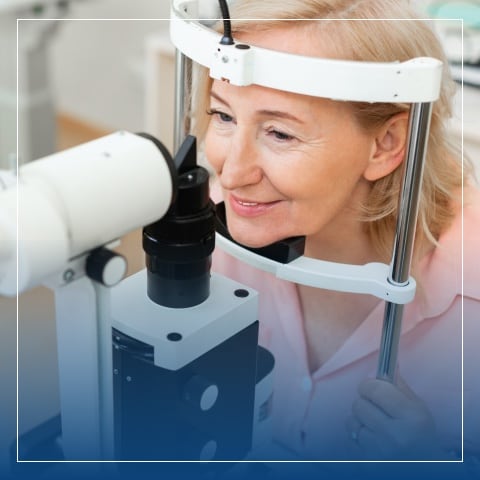
Astigmatism, diagnosed by an optometrist or ophthalmologist, usually involves a comprehensive eye examination. The exam includes a visual acuity test–reading letters on the eye chart, a refraction test, and Keratometry, which measures the cornea’s curvature.
Corrective eyeglasses or contact lenses treat mild to moderate astigmatism. Rigid contact lenses help correct the curvature of the cornea. Not too keen on long-term glasses and contact lenses to correct your astigmatism? There is another option called vision correction surgery.

What is LASIK Eye Surgery?
LASIK is a type of refractive eye surgery for the treatment of astigmatism. It works by using a laser to correct the shape of the cornea.
You can be eligible for LASIK, depending on several factors:
- Vision measurements: are measured in diopters. Diopters are units used to measure the correction or focusing power your eye lens requires.
- Cornea thickness: sufficient thickness is needed to create a flap in the cornea, remove tissue, and reshape the cornea.
- Stability: a person’s vision must be stable for at least 12 months before surgery.
- Health: overall good health with no underlying conditions or diseases.
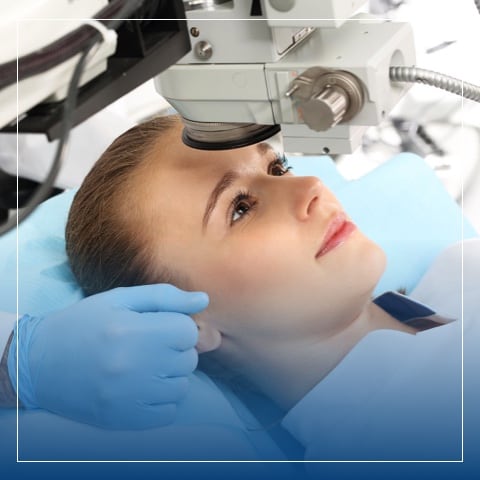
The procedure is an outpatient one where the patient is awake. You may receive a mild sedative to calm the body. Numbing eye drops are used to stabilize the eyes during the procedure.
A laser precisely cuts a flap in the cornea. The surgeon then folds back this flap, reshapes the underlying cornea, and folds the cornea back into place. The flap heals over time, and vision recovery is usually in a few days. LASIK can treat both eyes at the same time.
Benefits of Having LASIK Eye Surgery
If you are a candidate for LASIK eye surgery, the many benefits outweigh having to wear long-term corrective glasses and contact lenses:
- Safety: with laser, there are no blade-related complications.
- Corrects vision: approximately 90% of people who undergo LASIK restore their vision between 20/20 and 20/40.
- Precision: the precision of a computer-controlled laser ensures accurate flap alignment and accuracy.
- Individualized procedure: the entire LASIK process caters to the patient’s individual needs, from flap creation to ablation (removal of tissue).
Speak with Your Eye Doctor
Astigmatism is not only treated with prescription eyeglasses and contacts. LASIK is another option and a popular way to fix visual problems from astigmatism and other refractive errors. Discuss any questions about astigmatism with your eye doctor and whether you make a good candidate. Let Carolina Eyecare Physicians offer you the highest caliber of care with your sight in mind.