Reviewed By: Dr. Jonathan Brugger
Diabetic retinopathy can begin quietly. The retina may already be changing even when your vision seems normal. Knowing the diabetic retinopathy early signs means understanding that the first warning may not be something you can see or feel.
This matters because diabetes can damage the small blood vessels that supply the retina. Early damage may cause little or no change in daily vision. A comprehensive eye exam can detect these changes before noticeable vision problems develop.
Table of Contents
Why Can Diabetic Retinopathy Develop Without Symptoms?
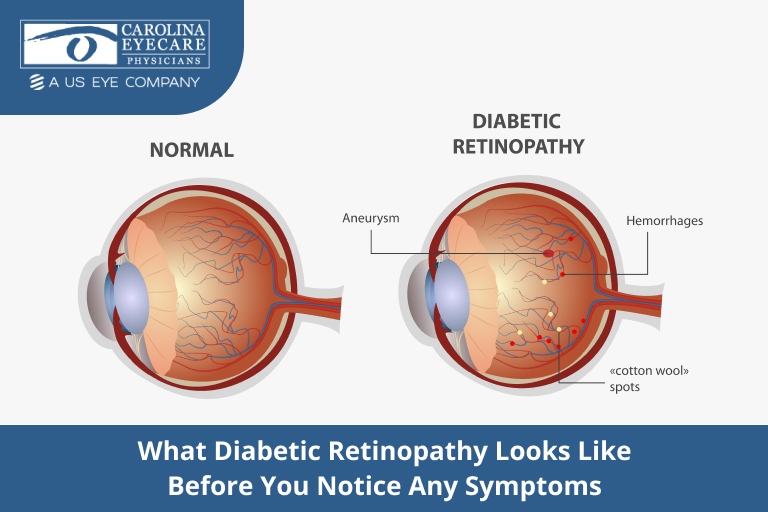
Diabetic retinopathy affects blood vessels in the retina, the light-sensitive tissue at the back of the eye. Over time, high blood sugar can weaken these tiny vessels. They may swell, leak fluid or blood, or eventually become blocked.
In the early stages, these changes may be too small to affect your vision. That means someone can read, drive, work, and use a phone normally while retinal damage is already present.
This is one reason silent eye damage from diabetes can be easy to overlook.
What can happen inside the retina?
Early retinal changes can include:
- Tiny bulges called microaneurysms
- Small areas of bleeding
- Leaking blood vessels
- Retinal swelling
- Areas with reduced blood flow
- Changes around the macula
These findings may be visible to an eye care professional during a dilated examination even when the patient has no noticeable symptoms.
What Does Early Diabetic Retinopathy Look Like?
Early diabetic retinopathy is generally classified as nonproliferative diabetic retinopathy, or NPDR. At this stage, retinal blood vessels can weaken and develop small bulges. Some vessels may also leak fluid or blood.
You cannot reliably identify these changes by looking in a mirror. They occur at the back of the eye and often require specialized equipment to detect.
What might an eye doctor see?
Depending on the stage, an examination may reveal:
| Retinal finding | What it can indicate |
| Microaneurysms | Small weakened areas in retinal blood vessels |
| Retinal hemorrhages | Small areas of bleeding |
| Hard exudates | Deposits associated with leaking blood vessels |
| Cotton-wool spots | Areas associated with reduced retinal blood flow |
| Retinal swelling | Fluid accumulation within retinal tissue |
| Abnormal blood vessels | A sign that disease has progressed |
These findings help an eye care professional determine whether retinopathy is mild, moderate, severe, or more advanced.
Do You Know? Diabetic retinopathy can affect both eyes, although the amount of damage does not necessarily have to be identical in each eye.
What Are the First Vision Changes You Might Eventually Notice?
The early stage may produce no noticeable vision change. As retinal damage progresses, however, visual symptoms can begin to appear.
Common diabetic retinopathy symptoms can include:
- Blurry vision
- Dark spots or floating shapes
- Difficulty seeing clearly
- Changes in color vision
- Dark or empty areas in the visual field
- Vision that becomes distorted
- Vision loss
Some people may also notice vision that fluctuates between clearer and blurrier periods. Symptoms can vary depending on which parts of the retina are affected.
Why does blurred vision happen?
One possible reason is diabetic macular edema. Damaged retinal blood vessels can leak fluid into the macula, the retina’s central part responsible for detailed vision.
When the macula swells, straight lines may appear distorted, and central vision can become blurry.
Not everyone with diabetic retinopathy develops macular edema, but it is an important complication because the macula plays a major role in reading, recognizing faces, and other detailed visual tasks.
How Does Diabetes Affect Vision Before Retinopathy Becomes Obvious?
Diabetes can affect vision in several ways. Temporary changes in blood sugar can sometimes affect the eye’s ability to focus, causing blurry vision. This is different from the retinal damage caused by diabetic retinopathy.
Understanding the difference is important.
| Vision change | Possible connection |
| Temporary blurry vision during blood sugar changes | Changes in the eye’s focusing ability |
| Persistent or recurring blurry vision | May have several causes, including retinal disease |
| New floaters or dark spots | Can occur with bleeding or other retinal changes |
| Distorted central vision | May occur with macular swelling |
| Sudden major vision change | Requires prompt medical evaluation |
Vision changes should not automatically be attributed to diabetes. Cataracts, glaucoma, retinal conditions, and other eye problems can also affect sight.
Why Is a Diabetic Eye Exam Important Even When You See Clearly?
The importance of a diabetic eye exam becomes clear when you consider what an ordinary vision check cannot show.
A standard vision test measures how well you can see letters or objects at certain distances. A comprehensive dilated eye exam also lets an eye care professional examine the retina for diabetes-related changes.
The American Diabetes Association’s 2026 Standards of Care recommend a comprehensive dilated eye exam for adults with type 2 diabetes at diagnosis. For adults with type 1 diabetes, the initial examination is recommended five years after diabetes begins. Follow-up intervals depend on the presence and severity of retinopathy and other risk factors.
What can an eye exam detect?
An examination may identify:
- Retinal blood vessel changes
- Bleeding
- Retinal swelling
- Macular edema
- Abnormal blood vessel growth
- Other retinal abnormalities
Additional imaging, such as optical coherence tomography (OCT), may be used when closer evaluation of the retina or macula is needed.
Pro Tip: Do not use normal day-to-day vision as proof that your retina is healthy. With diabetic eye disease, an exam can reveal changes you cannot see on your own.
What Happens as Diabetic Retinopathy Progresses?
Diabetic retinopathy generally progresses through stages. It doesn’t necessarily progress quickly from mild disease to severe vision loss. Some people remain stable for long periods, while others develop more significant retinal changes.
What happens during nonproliferative retinopathy?
NPDR is the earlier form. Retinal blood vessels can weaken, leak, or become blocked.
At mild stages, there may be few or no symptoms. As the disease progresses, retinal swelling, bleeding, and reduced blood flow can affect vision.
What happens during proliferative retinopathy?
In proliferative diabetic retinopathy, the retina may respond to areas of inadequate blood supply by growing abnormal new blood vessels.
These vessels are fragile. They can bleed into the vitreous, the gel-like substance inside the eye. Significant bleeding can cause many floaters, dark areas, or substantial vision loss.
Scar tissue can also develop and may contribute to retinal detachment.
Note: The absence of symptoms does not always mean diabetic retinopathy is mild. Vision-threatening disease can sometimes remain unnoticed, which is why screening matters.
What Can Help Reduce the Risk of Diabetes-Related Vision Loss?
Not every case of diabetic retinopathy can be prevented. However, managing diabetes and other health factors can help reduce the risk of developing or worsening diabetic eye disease.
Important steps include:
- Follow the diabetes management plan your healthcare team provides.
- Keep recommended appointments and monitoring tests.
- Manage blood pressure and cholesterol as advised.
- Avoid tobacco use.
- Keep scheduled eye examinations.
- Report new or changing vision symptoms promptly.
When Should You Seek Prompt Eye Care?
Some visual changes should not wait for a routine appointment.
Contact an eye care professional promptly if you experience:
- Sudden blurry vision
- A sudden increase in floaters
- Flashes of light
- New blind spots
- Distorted vision
- A sudden loss of vision
Sudden changes can have several causes, including serious retinal problems that require urgent evaluation.
What should you do if you have no symptoms?
Don’t wait for symptoms to schedule recommended screening.
The goal of screening is to identify retinal changes while there is still an opportunity to monitor or treat them. This is especially important because early detection of diabetic eye disease can allow appropriate follow-up before noticeable vision loss occurs.
What Should You Remember During American Diabetes Month?
November is American Diabetes Month, making it a useful time to think beyond blood sugar numbers and consider the possible effects of diabetes on the eyes. The American Diabetes Association recognizes November as American Diabetes Month, while the National Eye Institute also uses the month to raise awareness about diabetic eye disease.
Quick Fact: Diabetic retinopathy often has no symptoms in its early stages, yet a comprehensive dilated eye exam can detect it before noticeable vision changes occur.
Key Takeaways
- Diabetic retinopathy can begin without noticeable vision changes.
- Early retinal damage may be visible only during an eye exam.
- Microaneurysms, bleeding, leakage, and retinal swelling can develop before symptoms appear.
- As the condition progresses, blurry vision, floaters, dark areas, and vision loss can occur.
- Diabetic macular edema can affect central vision.
- People with diabetes need eye screening based on their diabetes type and individual risk.
- Managing blood sugar, blood pressure, and cholesterol can help reduce the risk of progression.
- Sudden vision changes require prompt medical attention.
What Your Vision May Not Tell You
The most important warning about diabetic retinopathy is also the easiest to miss: your vision can feel normal while retinal changes are already developing.
That does not mean every person with diabetes will develop serious eye disease. It means symptoms are not a reliable screening tool. Regular eye examinations provide a way to look for changes that cannot be detected through everyday vision alone.
For information about scheduling and what to expect from diabetic eye exams, reviewing recommended screening intervals with an eye care professional can help keep retinal health part of your diabetes care plan.
FAQs
Can diabetic retinopathy be present without blurry vision?
Yes. Early diabetic retinopathy often causes no noticeable symptoms. Retinal blood vessel changes can develop before vision becomes blurry or distorted, which is why screening is important for people with diabetes.
Can an eye exam find diabetic retinopathy before symptoms start?
Yes. A dilated eye exam lets an eye care professional examine the retina for changes that may not affect vision yet. Retinal photography and other imaging methods may also support screening in appropriate settings.
Does diabetes always cause vision loss?
No. Having diabetes does not mean that severe vision loss is inevitable. Risk varies between individuals. Managing diabetes, getting regular eye exams, and seeking timely care can help reduce the risk of serious vision problems.
Are floaters always a sign of diabetic retinopathy?
No. Floaters can have several causes. However, a sudden increase in floaters, especially with flashes or vision loss, should prompt a prompt eye exam because retinal bleeding or other retinal problems may be involved.
How often should someone with diabetes have an eye exam?
The schedule depends on the type of diabetes, whether retinopathy is present, and individual risk factors. Current ADA guidance recommends an initial comprehensive dilated exam at diagnosis for adults with type 2 diabetes and five years after onset for adults with type 1 diabetes. Follow-up may be annual or more frequent when retinopathy is present or progressing.
Regular diabetic eye exams can help identify retinal changes before they affect your vision, so talk with an eye care professional about the screening schedule that fits your needs.