Blog Hero

Protect Your Eyes at Work: Eye Exam Basics for Busy Employees

Schedule an Appointment
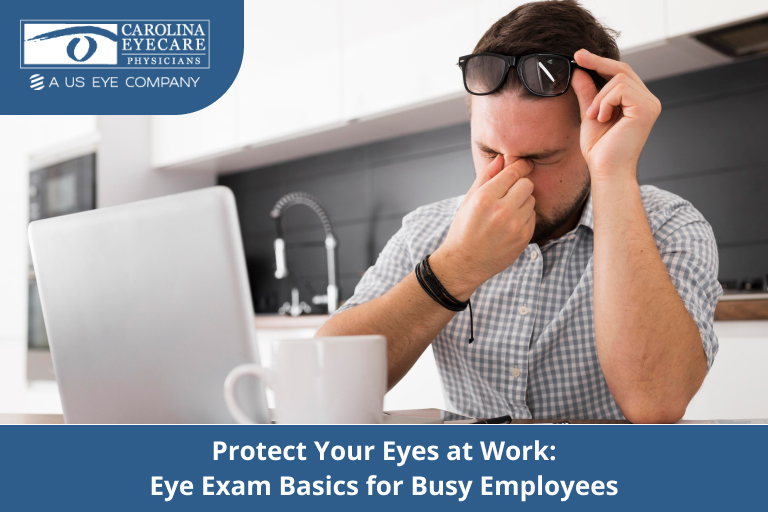
Office worker experiencing eye strain from prolonged screen use — Carolina Eyecare Physicians recommends annual eye exams for workplace eye health in SC

Reviewed By: Dr. Denise Carter, OD

Deadlines loom, inbox alerts ping, and the glow of a monitor fills your field of view. In the rush, it’s easy to ignore the slow burn behind your eyes or the text that looks just a shade fuzzier than yesterday. Modern jobs pile on visual stress all day long, from spreadsheet marathons to dusty warehouse floors. Understanding why eye exams are important, and acting on that knowledge, can mean the difference between powering through tasks and squinting your way toward chronic strain.

Below, you’ll learn how digital eye strain sneaks up on healthy eyes, how often eye checkups are needed, and the simple workplace tweaks that preserve sharp vision and top-tier productivity.

Silent Risks Behind the Screen

A yearly adult eye exam does more than sharpen a prescription. Your optometrist also measures eye pressure, scans the retina, and checks blood vessels—tests that reveal glaucoma, diabetic retinopathy, or macular changes long before blur appears. Companies that subsidize eye exams for employees report fewer sick days and fewer costly errors because staff see clearly and comfortably.

What Is Digital Eye Strain?

Hours on phones and monitors reduce blinking and lock focus. Watch for:

  • Scratchy, burning, or watery eyes
  • Blurred text that clears only after blinking
  • Forehead tightness or mid-afternoon headaches

Left alone, tension evolves into chronic dryness and lower job satisfaction. Routine exams let doctors recommend blue-light filters, mild reading boosts, or targeted lubricants before minor discomfort becomes daily downtime.

How Often Eye Checkups Are Needed

Most healthy adults can book a comprehensive exam every 12 months. Move to six-month visits if you:

  • Log eight or more screen hours daily
  • Work around dust, chemicals, or welding arcs
  • Have diabetes, hypertension, or a family history of eye disease

Using risk factors keeps vision on the radar long before problems take root.

dry eye treatment

Workplace Hazards and Quick Fixes

Small tweaks cut fatigue and protect long-term sight.

Screen glare and lighting

Tilt monitors away from windows, add task lamps, or apply matte filters to curb reflections.

Constant near focus

Follow the 20-20-20 rule: every twenty minutes, look twenty feet away for twenty seconds. The pause relaxes focusing muscles and refreshes the tear film.

Dry office air

Sip water throughout the day and keep preservative-free artificial tears within reach for mid-afternoon relief.

Flying debris or chemicals

Wear ANSI-rated goggles when cutting, grinding, or handling solvents. Replace scratched lenses right away.

Combine two or three fixes, and eye fatigue usually eases within a week.

Benefits of Regular Eye Exams

Clear sight fuels clear thinking. When employees see sharply, they finish reports faster, catch small defects on production lines, and avoid leaning toward screens. Early detection prevents expensive treatment later; insurance claims stay lower, and morale climbs. These gains underscore why eye exams are important for personal health and for a company’s bottom line.

Build an Eye-Friendly Culture

  1. Post 20-20-20 reminders at every screen station.
  2. Include micro-breaks in meeting agendas.
  3. Stock wrap-around safety specs anywhere tools, dust, or chemicals appear.
  4. Offer stipends for adult eye exams; the investment is minor compared with productivity lost to eye strain.

Consistent habits turn preventive care into a shared value instead of a personal chore.

Book Your Next Check Before Your Eyes Beg for It

If your last exam predates your current job or screen hours have doubled, schedule a visit soon. Regular adult eye exams guard against hidden disease, refine your prescription, and fine-tune strategies that defeat digital eye strain. Protect focus today so you can see your future clearly tomorrow—that’s the simplest answer to why eye exams are important in every workplace.
Written by Carolina Eyecare Physicians

More Articles By Carolina Eyecare Physicians

Locations

We have several convenient locations throughout South Carolina. Please view the nearest location to you or get directions below. 

    News

    Diabetic Retinopathy: Symptoms, Screening and Treatment Explained by Dr. King

    Diabetic Retinopathy

    Reviewed By: Dr.Lowrey P. King, MD When you have diabetes, you already have plenty to manage. An eye appointment may not feel urgent, especially when you can still read, drive, and see clearly. But clear vision does not always mean your retina is healthy. Diabetes can damage the blood vessels inside your eyes before you […]

    Read More… from Diabetic Retinopathy: Symptoms, Screening and Treatment Explained by Dr. King

    October 20, 2026
    Carolina Eyecare Physicians

    What Diabetic Retinopathy Looks Like Before You Notice Any Symptoms

    Diabetic Retinopathy

    Reviewed By: Dr. Jonathan Brugger Diabetic retinopathy can begin quietly. The retina may already be changing even when your vision seems normal. Knowing the diabetic retinopathy early signs means understanding that the first warning may not be something you can see or feel. This matters because diabetes can damage the small blood vessels that supply […]

    Read More… from What Diabetic Retinopathy Looks Like Before You Notice Any Symptoms

    October 15, 2026
    Carolina Eyecare Physicians

    Cataract Surgery Lens Options: Which IOL Is Right for You?

    Cataract Surgery

    Reviewed By: Dr. Peter B. Knowlton Summary Cataract eye surgery replaces the eye’s cloudy natural lens with an artificial intraocular lens, or IOL. Available options include monofocal lenses, toric correction for astigmatism, multifocal or trifocal lenses, extended depth-of-focus lenses, and the Light Adjustable Lens. The right choice depends on your eye health, visual priorities, comfort […]

    Read More… from Cataract Surgery Lens Options: Which IOL Is Right for You?

    September 15, 2026
    Carolina Eyecare Physicians
    Woman is getting examined for diabetic retinopathy

    Reviewed By: Dr.Lowrey P. King, MD When you have diabetes, you already have plenty to manage. An eye appointment may not feel urgent, especially when you can still read, drive, and see clearly. But clear vision does not always mean your retina is healthy. Diabetes can damage the blood vessels inside your eyes before you […]

    Read More… from Diabetic Retinopathy: Symptoms, Screening and Treatment Explained by Dr. King

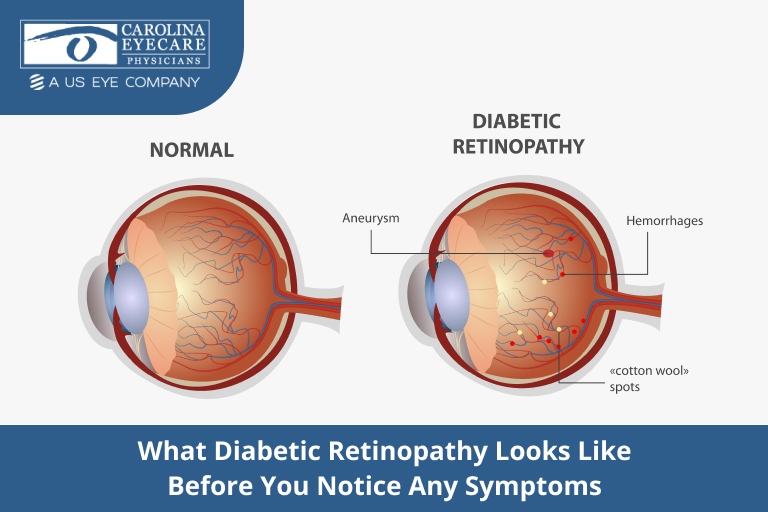
    Medical illustration comparing a normal retina with diabetic retinopathy, showing retinal aneurysms, hemorrhages, and cotton-wool spots.

    Reviewed By: Dr. Jonathan Brugger Diabetic retinopathy can begin quietly. The retina may already be changing even when your vision seems normal. Knowing the diabetic retinopathy early signs means understanding that the first warning may not be something you can see or feel. This matters because diabetes can damage the small blood vessels that supply […]

    Read More… from What Diabetic Retinopathy Looks Like Before You Notice Any Symptoms

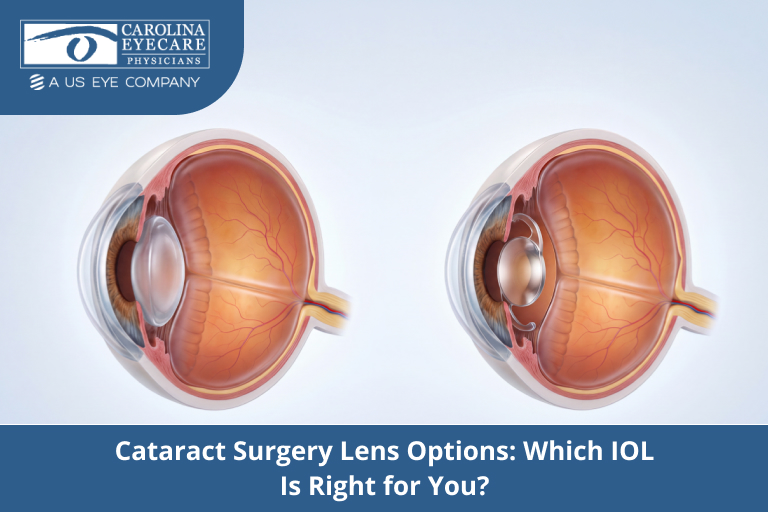
    Cataract surgery lens options showing two intraocular lens (IOL) implants inside the eye

    Reviewed By: Dr. Peter B. Knowlton Summary Cataract eye surgery replaces the eye’s cloudy natural lens with an artificial intraocular lens, or IOL. Available options include monofocal lenses, toric correction for astigmatism, multifocal or trifocal lenses, extended depth-of-focus lenses, and the Light Adjustable Lens. The right choice depends on your eye health, visual priorities, comfort […]

    Read More… from Cataract Surgery Lens Options: Which IOL Is Right for You?

    Carolina Eyecare Physicians Partner Background Image
    US Eye Logo

    We are a proud partner of US Eye, a leading group of patient-centric, vertically integrated multi-specialty physician practices providing patients with care in ophthalmology, optometry, dermatology, audiology, and cosmetic facial surgery.

    instagram facebook facebook2 pinterest twitter google-plus google linkedin2 yelp youtube phone location calendar share2 link star-full star star-half chevron-right chevron-left chevron-down chevron-up envelope fax