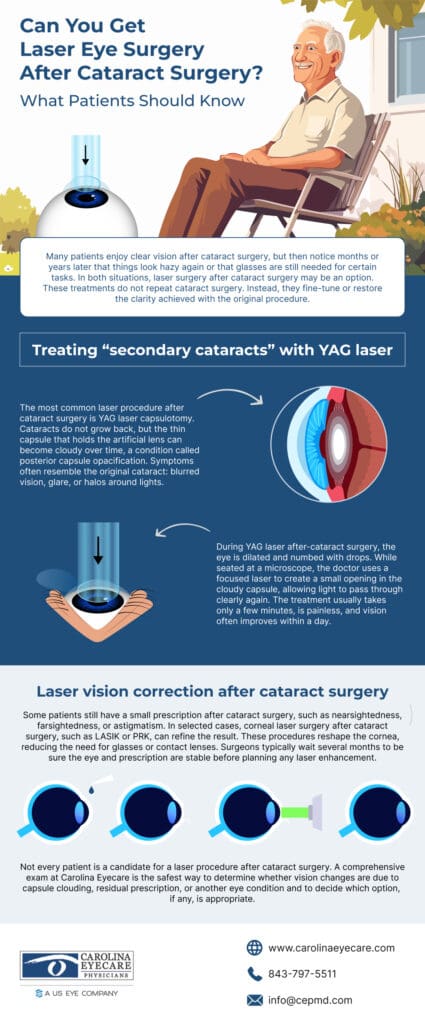

Many people see a big improvement after cataract surgery, then notice a change later. Sometimes vision gets hazy again months or years down the line. In other cases, the vision is clearer than before, but glasses still help with certain tasks. Depending on the cause, a laser procedure after cataract surgery may be an option.
These treatments do not “redo” cataract surgery. They address two common post-op issues: a cloudy lens capsule (often called a “secondary cataract”) or a leftover prescription that can be refined with corneal laser vision correction.
Table of Contents
Why Vision Can Change After Cataract Surgery
Cataract surgery replaces the cloudy natural lens with an artificial lens implant. After that, vision can still shift for a few reasons, including changes to the thin membrane that holds the implant in place, healing-related dryness that affects clarity, or a small amount of nearsightedness, farsightedness, or astigmatism that remains after surgery.
The key is pinpointing what is driving the change. A “glasses problem” and a “capsule problem” can feel similar day to day, but they are treated differently.
What to Expect at Your Evaluation
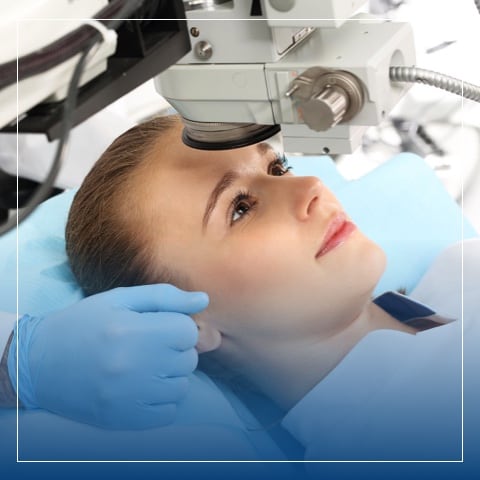
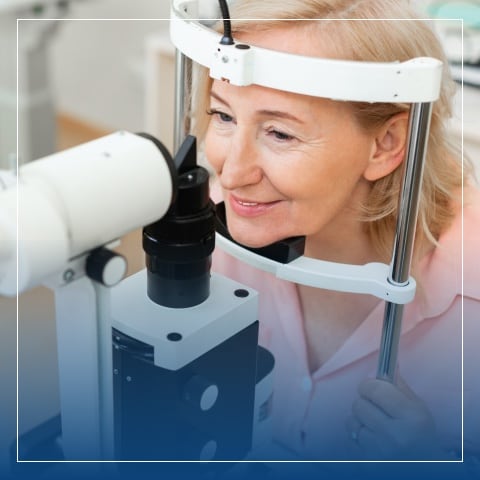
A comprehensive exam is the safest way to determine whether vision changes are due to capsule clouding, residual prescription, dry eye, or another eye condition. At Carolina Eyecare Physicians, that evaluation typically includes a refraction to measure your prescription, a detailed look at the lens implant and capsule, and testing that helps confirm whether a YAG procedure, a refractive laser enhancement, or a different plan is the right fit.
If you are noticing a sudden change in vision, new flashes of light, a curtain-like shadow, or significant pain, that warrants urgent evaluation rather than waiting for a routine appointment.