
Blog Hero

Why LASIK? Definition, Uses, Benefits

Schedule an Appointment
Laser Treatment for Eyes

Reviewed By: Drew Hunter, MD

Picture this: you wake up in the morning to a crystal-clear world. No more reaching for glasses or squinting to see the details. With LASIK (Laser-Assisted In Situ Keratomileusis), this ultimate solution corrects vision problems to make seeing clearly a reality.

What is LASIK?

LASIK treatment is a cutting-edge procedure that combines the power of lasers with meticulous precision, revolutionizing modern eye surgery. Unlike traditional methods, LASIK is blade-free, using advanced laser technology to achieve high levels of accuracy.

How it Works

Using laser treatment for the eyes, an eye surgery specialist reshapes the cornea to correct refractive errors like astigmatism, hyperopia (farsightedness), and myopia (nearsightedness). LASIK treatment can boost the eye’s ability to focus, granting better vision.

It is quickly emerging as one of the most popular forms of vision correction treatment due to its smooth accuracy, safety, rapid recovery, and comfortable experience. From beginning to end, the entire process takes a matter of minutes, correcting both eyes within the same day—no needles, stitches, or patches needed.
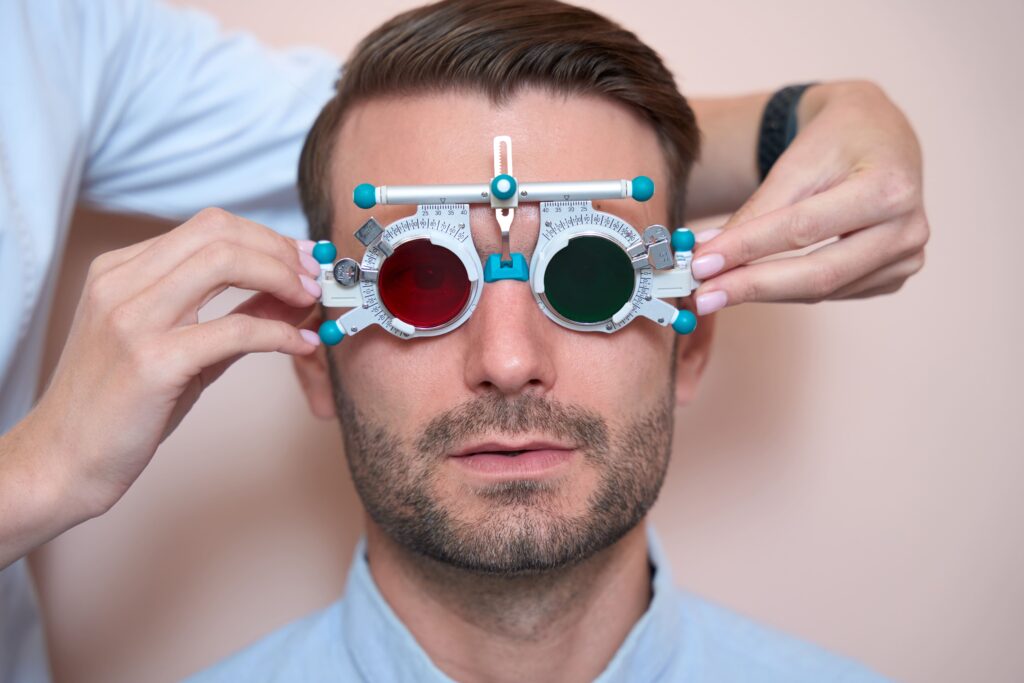
Benefits of Lasik Treatment

LASIK Benefits

Visual Freedom 

LASIK addresses the root of the problem—tedious maintenance, cleaning, and replacements associated with glasses and contacts are no longer required. Live life without the hassle of poor vision and say hello to near-perfect, 20/20 vision.

Fitness Becomes Easy

With improved eyesight, your overall physical performance becomes easier to manage. Participate in sports and other activities with enhanced clarity knowing your contact lenses won’t fall out or your glasses won’t get in the way. LASIK vision correction breathes life into your physical fitness as your senses and eyesight become much stronger.

Better Field of View

When you rely on glasses, your peripheral vision is often limited to items directly in front of you. Thankfully, LASIK reshapes your cornea so that you can see far past frontal objects with advanced spatial awareness and depth perception. 

Long-Term Fulfillment

LASIK is not a one-stop solution for better eyesight; it’s a long-term investment in your eye health and well-being. Ignoring proper eye care is not only damaging but also expensive—it forces you to constantly pursue new glasses, contact lenses, and maintenance solutions. 

Additionally, untreated vision problems can even lead to permanent blindness. LASIK fixes all these issues and more with better safety and vision, reduced dry eye symptoms, and tailored treatment.

Bring Clear Vision to Life with LASIK

When you visit Carolina Eyecare Physicians for LASIK eye surgery, you unlock more than just improved vision—it offers an enhanced quality of life. Our nationally renowned ophthalmologists perform LASIK with peak safety, precision, and care.

With a comprehensive 4-step process, we achieve seamless LASIK treatment by leveraging wavefront technology to map the eye, a computer-controlled laser to create a corneal flap, advanced technology to reshape the cornea, and finally, move the protective flap back into place. Want to learn more about LASIK or other alternatives? Book a LASIK consultation with us to discover your options.

**The information provided in this blog on LASIK treatment is for general informational purposes only. Remember to seek advice from a qualified eye care professional with any questions you may have regarding your specific medical condition or treatment options.**


Written by useye

More Articles By useye

Locations

We have several convenient locations throughout South Carolina. Please view the nearest location to you or get directions below. 

    News

    Cornea Transplant Recovery: What to Expect Week by Week

    cornea care

    Reviewed By: Dr. Cole Miliken, MD Summary Cornea transplant recovery is gradual. Some patients notice improvement within weeks, while others need many months for vision to stabilize. The timeline depends on the type of transplant, the reason for surgery, your eye health, and how closely you follow your postoperative instructions. More than 47,000 corneal transplants […]

    Read More… from Cornea Transplant Recovery: What to Expect Week by Week

    July 17, 2026
    useye

    Cloudy Vision in One or Both Eyes: When Should You See an Eye Doctor?

    Cataract Surgery, Laser Cataract Surgery

    Reviewed By: Dr. John G. P. Boatwright Summary Cloudy vision can make your vision seem hazy, milky, or foggy. Sometimes it develops gradually and points to a condition like cataracts. Other times, especially when it appears suddenly, it can signal a more urgent problem that needs prompt medical attention. This guide explains common causes of […]

    Read More… from Cloudy Vision in One or Both Eyes: When Should You See an Eye Doctor?

    June 12, 2026
    useye

    Dr. Kerry Solomon Delivers Prestigious ASCRS Binkhorst Lecture on the Future of AI in Ophthalmology

    News & Updates

    Carolina Eyecare Physicians is proud to recognize Kerry D. Solomon, MD, Chief Medical Officer of US Eye and Medical Director of Carolina Eyecare Physicians, for being selected to deliver the prestigious ASCRS Binkhorst Lecture on April 11, 2026; a distinction considered one of the most significant career honors in ophthalmology. The Binkhorst Lecture is among […]

    Read More… from Dr. Kerry Solomon Delivers Prestigious ASCRS Binkhorst Lecture on the Future of AI in Ophthalmology

    May 14, 2026
    useye
    Cornea Transplant Recovery

    Reviewed By: Dr. Cole Miliken, MD Summary Cornea transplant recovery is gradual. Some patients notice improvement within weeks, while others need many months for vision to stabilize. The timeline depends on the type of transplant, the reason for surgery, your eye health, and how closely you follow your postoperative instructions. More than 47,000 corneal transplants […]

    Read More… from Cornea Transplant Recovery: What to Expect Week by Week

    Cloudy Vision in One or Both Eyes_ When Should You See an Eye

    Reviewed By: Dr. John G. P. Boatwright Summary Cloudy vision can make your vision seem hazy, milky, or foggy. Sometimes it develops gradually and points to a condition like cataracts. Other times, especially when it appears suddenly, it can signal a more urgent problem that needs prompt medical attention. This guide explains common causes of […]

    Read More… from Cloudy Vision in One or Both Eyes: When Should You See an Eye Doctor?

    Dr. Kerry Solomon, Medical Director of Carolina Eyecare Physicians, delivering the ASCRS Binkhorst Lecture on AI in Ophthalmology.

    Carolina Eyecare Physicians is proud to recognize Kerry D. Solomon, MD, Chief Medical Officer of US Eye and Medical Director of Carolina Eyecare Physicians, for being selected to deliver the prestigious ASCRS Binkhorst Lecture on April 11, 2026; a distinction considered one of the most significant career honors in ophthalmology. The Binkhorst Lecture is among […]

    Read More… from Dr. Kerry Solomon Delivers Prestigious ASCRS Binkhorst Lecture on the Future of AI in Ophthalmology

    Carolina Eyecare Physicians Partner Background Image
    US Eye Logo

    We are a proud partner of US Eye, a leading group of patient-centric, vertically integrated multi-specialty physician practices providing patients with care in ophthalmology, optometry, dermatology, audiology, and cosmetic facial surgery.

    instagram facebook facebook2 pinterest twitter google-plus google linkedin2 yelp youtube phone location calendar share2 link star-full star star-half chevron-right chevron-left chevron-down chevron-up envelope fax