
Retina Care
How much do you know about your retina health? Preventing and treating retina conditions are crucial for preserving your vision. Carolina Eyecare Physicians can help patients manage and treat retina conditions.
What Is the Retina?
The retina is the light-sensitive tissue lining the back of our eye. Light rays are focused onto the retina through our cornea, pupil and lens. The retina converts the light rays into impulses that travel through the optic nerve to our brain, where they are interpreted as the images we see. A healthy, intact retina is key to clear vision.
The middle of our eye is filled with a clear gel called vitreous that is attached to the retina. Sometimes tiny clumps of gel or cells inside the vitreous will cast shadows on the retina, and you may sometimes see small dots, specks, strings or clouds moving in your field of vision.
These are called floaters. You can often see them when looking at a plain, light background, like a blank wall or blue sky.
As we get older, the vitreous may shrink and pull on the retina. When this happens, you may notice what look like flashing lights, lightning streaks or the sensation of seeing “stars.” These are called flashes.
How are Retinal Conditions Diagnosed?
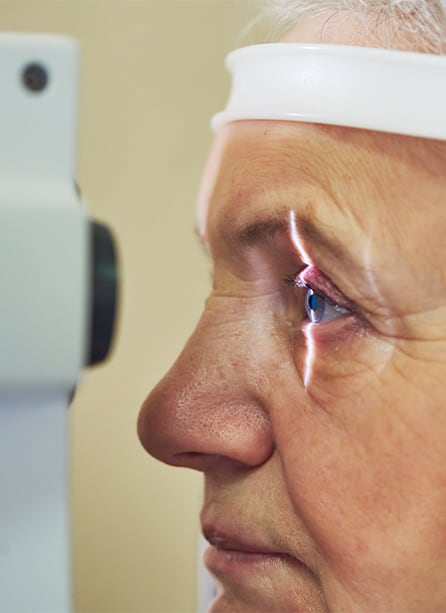
Your retina eye specialist can diagnose retinal tear or retinal detachment during an eye examination where he or she dilates (widens) the pupils of your eyes. Only after careful examination can your ophthalmologist tell whether a retinal tear or early retinal detachment is present. Some retinal detachments are found during a routine eye examination. That is why it is so important to have regular eye exams.
After successful retina laser surgery or retina detachment surgery, vision may take many months to improve and, in some cases, may never return fully. Unfortunately, some patients do not recover any vision. The more severe the detachment, the less vision may return. For this reason, it is very important to see your ophthalmologist regularly or at the first sign of any trouble with your vision.
Who is at Risk?
People with the following conditions have an increased risk for retinal detachment:
- Nearsightedness
- Previous cataract, glaucoma or other eye surgery
- Glaucoma medications that make the pupil small
- Severe eye injury
- Previous retinal detachment in the other eye
- Family history of retinal detachment
- Weak areas in the retina that can be seen by an ophthalmologist during an eye exam
Causes of Retina Conditions
As we get older, the vitreous may change shape, pulling away from the retina. If the vitreous pulls a piece of the retina with it, it causes a retinal tear. Once a retinal tear occurs, vitreous fluid may seep through and lift the retina off the back wall of the eye, causing the retina to detach or pull away.
Vitreous fluid normally shrinks as we age, and this usually doesn’t cause damage to the retina. However, inflammation (swelling) or nearsightedness (myopia) may cause the vitreous to pull away and result in retinal detachment.
Symptoms of a Detached or Torn Retina
Symptoms of a retinal tear and a retinal detachment can include the following:
- A sudden increase in size and number of floaters, indicating a retinal tear may be occurring
- A sudden appearance of flashes, which could be the first stage of a retinal tear or detachment
- Having a shadow appear in the periphery (side) of your field of vision
- Seeing a gray curtain moving across your field of vision
- A sudden decrease in your vision
Floaters and flashes in themselves are quite common and do not always mean you have a retinal tear or detachment. However, if they are suddenly more severe and you notice you are losing vision, you should call your ophthalmologist right away.

Retina Conditions
Regular comprehensive eye exams are essential for preventing and detecting many conditions that can affect the retina. The sooner a problem is diagnosed, the earlier patients can begin retinal tear treatment.
- Age Related Macular Degeneration (AMD) is a common condition that affects your central vision. AMD occurs when the macula begins to thin as we age. While AMD does not cause blindness, it can affect your vision and impact your ability to drive, read, and recognize faces.
- Dry AMD: The most common form of this condition. Dry AMD causes the tissue in the macula to thin and lose the cells needed for vision.
- Wet AMD: A less common condition, but typically more sever. Wet AMD occurs when abnormal blood vessels leak fluid and blood into the macula. Wet AMD is a medical emergency requiring care as soon as possible.
- Diabetic Retinopathy occurs when diabetes damages the blood vessels, leading to blurry, distorted vision and potential blindness. This disease has two stages: nonproliferative and proliferative. Learn more about how GA can appear.
- A Macular Pucker is a condition when your vision becomes wavy or distorted. It occurs when wrinkles, creases or bulges form in the macula. As the vitreous pulls away from the macula, scar tissue may develop, causing the retina to wrinkle or bulge.
- A Macular Hole is a small break in the macula, causing blurred and distorted vision. This occurs when the shrinking vitreous adheres to the macula. The macula tissue then stretches and tears as time goes by. This could be weeks or months.
- Posterior Vitreous Detachment (PVD) is a condition that can occur as you age. The vitreous can change with time, becoming more liquid-like. It shrinks and pulls away from the back of the eye. It is important to note that PVD does not typically cause significant problems, but have the potential to lead to a retinal tear or detachment if left untreated.
- Symptoms of this condition are: flashes of light, floaters, a shadow in your peripheral vision or a gray curtain moving across your visual field.
Types of Treatment
We offer a variety of treatment options for retinal conditions. Your physician will work with you to determine the best course of treatment depending on your lifestyle and specific retina condition.
Surgery
Most retinal tears need to be treated by sealing the retina to the back wall of the eye with laser surgery or cryotherapy (a freezing treatment). Both of these procedures create a scar that helps seal the retina to the back of the eye. This prevents fluid from traveling through the tear and under the retina, which usually prevents the retina from detaching. These treatments cause little or no discomfort and may be performed in your ophthalmologist’s office.
Scleral Buckle
This treatment involves placing a flexible band (scleral buckle) around the eye to counteract the force pulling the retina out of place. The ophthalmologist often drains the fluid under the detached retina, allowing the retina to settle back into its normal position against the back wall of the eye. This procedure is performed in an operating room.
Pneumatic Retinopexy
In this procedure, a gas bubble is injected into the vitreous space inside the eye in combination with laser surgery or cryotherapy. The gas bubble pushes the retinal tear into place against the back wall of the eye. Sometimes this procedure can be done in the ophthalmologist’s office. Your ophthalmologist will ask you to constantly maintain a certain head position for several days. The gas bubble will gradually disappear.
Vitrectomy
This surgery is commonly used to fix a retinal detachment and is performed in an operating room. The vitreous gel, which is pulling on the retina, is removed from the eye and usually replaced with a gas bubble.
Sometimes an oil bubble is used (instead of a gas bubble) to keep the retina in place. Your body’s own fluids will gradually replace a gas bubble. An oil bubble will need to be removed from the eye at a later date with another surgical procedure. Sometimes vitrectomy is combined with a scleral buckle.
If a gas bubble was placed in your eye, your ophthalmologist may recommend that you keep your head in special positions for a time. Do not fly in an airplane or travel at high altitudes until you are told the gas bubble is gone. A rapid increase in altitude can cause a dangerous rise in eye pressure. With an oil bubble, it is safe to fly on an airplane.
Protect Your Retina Health
Every part of your eye deserves care. Protecting your retina health is essential for functioning vision. Booking regular eye exams can help your eye care team monitor your retina health and vision. At Carolina Eyecare Physicians, our eye doctors have the training and expertise to help our patients preserve their eye health.
Frequently Asked Questions
When should I see a retina eye specialist right away?
If you suddenly notice a lot more floaters, flashing lights, or a “shadow” or “curtain” creeping over your vision, it might signal a tear or detachment. It’s important to contact a retina eye specialist immediately because early detection can make a huge difference in preserving vision.
What exactly is retina tear laser surgery and how does it work?
During retina tear laser surgery, a precise laser is used to make microscopic burns around the tear or hole in your retina. These create controlled scar tissue that seals the retina to the back wall of the eye, stopping fluid from leaking underneath and preventing detachment.
Is laser treatment for retinal tear painful, and what is the recovery like?
No laser treatment for a retinal tear is usually done in an outpatient setting under local anesthesia, and most patients feel little to no pain. After the procedure, recovery tends to be quick: many people can resume normal activities in a few days or weeks, though doctors often advise avoiding strenuous activity for a short time.
Does this laser treatment restore lost vision, or only prevent further damage?
The main goal of retina tear laser surgery is to prevent further damage, namely, retinal detachment, by sealing the tear. It typically does not restore vision that was already lost, but it does dramatically reduce the risk of further vision loss.
Are there situations when laser treatment for a tear may not be enough?
Yes. In some cases, depending on the location, size, or severity of the tear, additional procedures may be needed (for example, more complex surgeries). A trusted retina eye specialist will evaluate each case and recommend the most appropriate approach.
Locations
We have several convenient locations throughout South Carolina. Please view the nearest location to you or get directions below.
Our Services
News
Best Contact Lens For Astigmatism: How to Choose the Right Fit for Clear Vision
otherReviewed By: Dr. Vanderah If you have astigmatism, you know the frustration of blurry or distorted vision. Maybe you’ve squinted through a presentation, struggled to read street signs at night, or felt your eyes tire after an hour at your desk. The good news is that modern contact lenses for astigmatism can effectively correct the […]
Read More… from Best Contact Lens For Astigmatism: How to Choose the Right Fit for Clear Vision
Cataracts vs Glaucoma: The Difference and When to Get Checked
Cataracts, Glaucoma, UncategorizedReviewed By: Dr. Miliken Vision changes rarely announce themselves in a single dramatic moment. More often, it starts as a slight friction that builds. Headlights feel harsher at night. Print looks slightly softer. One eye seems to “do more work” than the other. Two of the most common causes of those shifts are cataracts and […]
Read More… from Cataracts vs Glaucoma: The Difference and When to Get Checked
Can You Get Laser Eye Surgery After Cataract Surgery? What Patients Should Know
Cataract Surgery, UncategorizedReviewed By: Dr. Reuther Many people see a big improvement after cataract surgery, then notice a change later. Sometimes vision gets hazy again months or years down the line. In other cases, the vision is clearer than before, but glasses still help with certain tasks. Depending on the cause, a laser procedure after cataract surgery […]
Read More… from Can You Get Laser Eye Surgery After Cataract Surgery? What Patients Should Know
Best Contact Lens For Astigmatism: How to Choose the Right Fit for Clear Vision
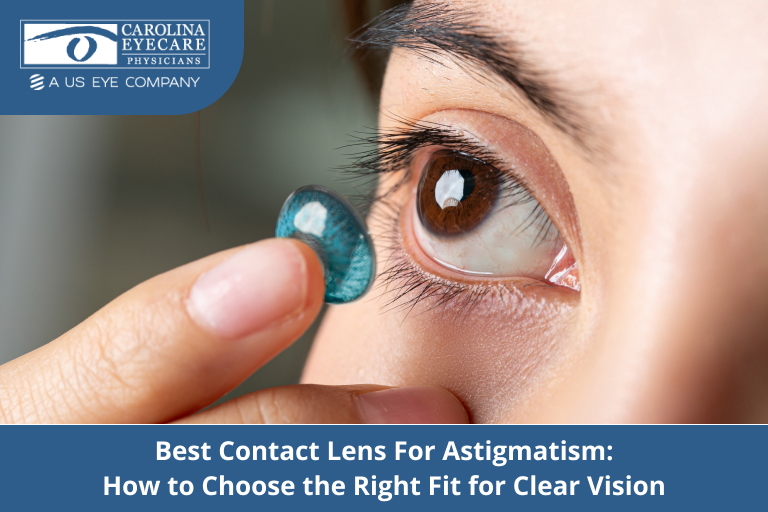
Reviewed By: Dr. Vanderah If you have astigmatism, you know the frustration of blurry or distorted vision. Maybe you’ve squinted through a presentation, struggled to read street signs at night, or felt your eyes tire after an hour at your desk. The good news is that modern contact lenses for astigmatism can effectively correct the […]
Read More… from Best Contact Lens For Astigmatism: How to Choose the Right Fit for Clear Vision
Cataracts vs Glaucoma: The Difference and When to Get Checked
Reviewed By: Dr. Miliken Vision changes rarely announce themselves in a single dramatic moment. More often, it starts as a slight friction that builds. Headlights feel harsher at night. Print looks slightly softer. One eye seems to “do more work” than the other. Two of the most common causes of those shifts are cataracts and […]
Read More… from Cataracts vs Glaucoma: The Difference and When to Get Checked
Can You Get Laser Eye Surgery After Cataract Surgery? What Patients Should Know

Reviewed By: Dr. Reuther Many people see a big improvement after cataract surgery, then notice a change later. Sometimes vision gets hazy again months or years down the line. In other cases, the vision is clearer than before, but glasses still help with certain tasks. Depending on the cause, a laser procedure after cataract surgery […]
Read More… from Can You Get Laser Eye Surgery After Cataract Surgery? What Patients Should Know


We are a proud partner of US Eye, a leading group of patient-centric, vertically integrated multi-specialty physician practices providing patients with care in ophthalmology, optometry, dermatology, audiology, and cosmetic facial surgery.