
A Unique Fit for Unique Eyes
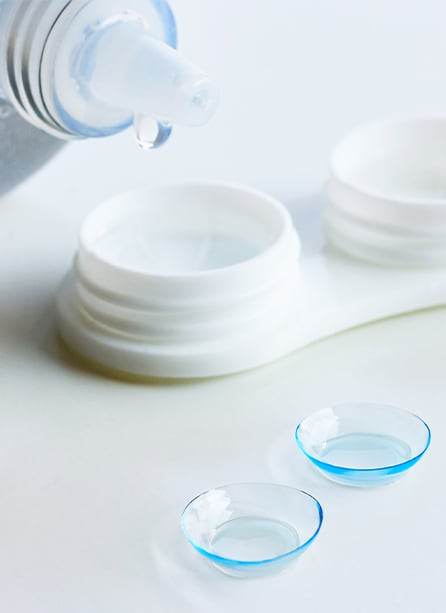
Contact lens exams are essential for preparing your contact lens. Every eye is unique, so contact lenses need to be customized for unique eye measurements. Whether you’re ready for your first lenses or a prescription update, a contact lens exam can help ensure the best possible fit.
Contact Carolina Eyecare Physicians for contact lens exams and contact lens fitting.
What to Expect from an Exam & Fitting
A contact lens exam is not the same as a comprehensive eye exam. While a contact lens exam evaluates eye health and prescription, it is not as in-depth. Therefore, it is not a substitute for a regular eye exam.
Diagnosing your prescription and eye health during an exam is only the first step in getting your new contact lenses. Fitting your contact lenses requires various measurements and evaluations, including:
These measurements and evaluations are crucial for creating a contact made just for you. It’s also part of determining if you’re a good candidate for contact lenses. For example, patients with dry eyes are typically poor candidates for traditional contact lenses.
Eye care providers will also discuss how to safely wear and care for lenses with first-time wearers. The patient may practice placing and removing the lens and receives a trial pair to take home. If the lenses are a good fit, the patient then receives their prescription lenses. Some patients may need to try another pair to find an appropriate fit.

Contact Lens Types
After evaluating your prescription and measuring your eye to determine fit, the final decision is contact lens type. There are 2 main types of contact lenses: rigid gas permeable and soft contact lenses. Some patients may try both before finding their top choice for comfort and vision.
Rigid Gas Permeable Lenses
Rigid gas permeable (RGP) contacts are sometimes referred to as hard contacts as they lack flexibility. The firmer material is more durable and provides sharper vision. However, it can take longer to adjust to RGP contact lenses initially and patients should wear them consistently.
Soft Lenses
Soft contact lenses are flexible and are generally easier to adjust to than RGP contact lenses. The closer fit can improve how the lens stays on the eye, making it a preferred choice for sports. Soft contact lenses are available in multiple wearing options, including daily disposable or extended wear.
Hybrid Lenses
Hybrid contact lenses combine the features of RGP and soft contact lenses. The center is firm but the outer skirt is soft. Patients can experience sharper vision with a more comfortable fit.
Scleral Lenses
Unlike traditional contact lenses which rest on the cornea (the front surface of the eye), scleral contact lenses vault over the cornea and rest on the sclera (the white part of the eye).
Scleral contact lenses are similar to a rigid gas permeable (RGP) contact lens but with a larger diameter. The custom-fitted lenses help maintain moisture and protect the eye, promoting surface healing.
Patients with irregular corneas can experience difficulty finding contact lenses that fit comfortably. Scleral lenses can benefit patients with “hard-to-fit” eyes, including patients with cornea conditions like keratoconus. The improved moisture can also help reduce symptoms of dry eye.
Book Your Exam & Fitting
Contact lens fit is an art. Although there are scientific measurements essential to creating a customized pair, the best possible fit is up to your needs. Our eye exams center can help you find what feels most comfortable for you.
Contact us at Carolina Eyecare Physicians for a contact lens exam and fitting.

Order Your Contacts with Abby
Order your contacts the Abby way. The friendly and easy way to order your contact lenses – from your eye doctor that you already know and trust. Ordering through Abby ensures that you have an easy, convenient, and secure contact lens ordering experience. You can track your orders, see your prescription at any time, and stay up to date on details like when your prescription will expire.
Ask your local optician and sign up for Abby today!
Already Registered? Click here to order!
Frequently Asked Questions
What happens during a typical contact lens exam?
During a contact lens exam, we check your vision prescription, measure the curvature of your eyes, and evaluate tear film quality to ensure comfort. Your eye specialist will recommend the best lens options and determine whether a personalized contact lens fitting with a trained contact lens specialist is needed.
How do I know if I should see a contact lens specialist instead of just getting lenses at a store?
A trained contact lens specialist can assess eye health, fit specialty lenses, and troubleshoot comfort issues that generic fittings miss. If you’ve had irritation, fluctuating vision, or complex prescriptions, an eye specialist doctor with proper contact lens fitting expertise can make a big difference.
Are contact lens fittings painful or long?
Not at all a proper contact lens fitting is gentle and typically quick, taking only a few extra minutes beyond your standard exam. The contact lens specialist will guide you step-by-step, and the eye specialist will ensure lenses are comfortable and safe before you leave.
How often should I get follow-ups after my contact lens exam?
After your initial contact lens exams and contact lens fitting, most people return for a follow-up within one to two weeks, then at least annually or sooner if problems arise. Regular checks with your eye specialist doctor and contact lens specialist keep your eyes healthy and your fit optimal.
What should I bring to my contact lens exam appointment?
Bring your current glasses or contact lens prescription, a list of any eye drops or medications, and any questions about lifestyle needs (sports, screen time). That information helps your eye specialist doctor and contact lens specialist perform an accurate contact lens fitting and recommend the right lenses for you.
Locations
We have several convenient locations throughout South Carolina. Please view the nearest location to you or get directions below.
Our Services
News
Best Contact Lens For Astigmatism: How to Choose the Right Fit for Clear Vision
otherReviewed By: Dr. Vanderah If you have astigmatism, you know the frustration of blurry or distorted vision. Maybe you’ve squinted through a presentation, struggled to read street signs at night, or felt your eyes tire after an hour at your desk. The good news is that modern contact lenses for astigmatism can effectively correct the […]
Read More… from Best Contact Lens For Astigmatism: How to Choose the Right Fit for Clear Vision
Cataracts vs Glaucoma: The Difference and When to Get Checked
Cataracts, Glaucoma, UncategorizedReviewed By: Dr. Miliken Vision changes rarely announce themselves in a single dramatic moment. More often, it starts as a slight friction that builds. Headlights feel harsher at night. Print looks slightly softer. One eye seems to “do more work” than the other. Two of the most common causes of those shifts are cataracts and […]
Read More… from Cataracts vs Glaucoma: The Difference and When to Get Checked
Can You Get Laser Eye Surgery After Cataract Surgery? What Patients Should Know
Cataract Surgery, UncategorizedReviewed By: Dr. Reuther Many people see a big improvement after cataract surgery, then notice a change later. Sometimes vision gets hazy again months or years down the line. In other cases, the vision is clearer than before, but glasses still help with certain tasks. Depending on the cause, a laser procedure after cataract surgery […]
Read More… from Can You Get Laser Eye Surgery After Cataract Surgery? What Patients Should Know
Best Contact Lens For Astigmatism: How to Choose the Right Fit for Clear Vision
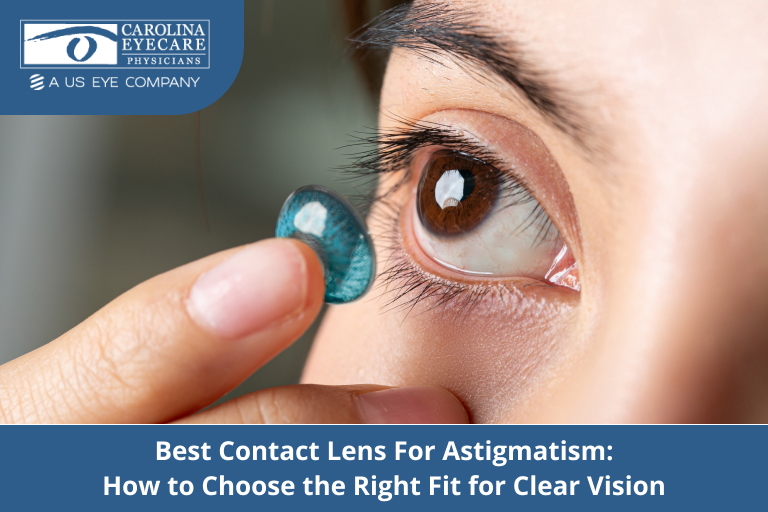
Reviewed By: Dr. Vanderah If you have astigmatism, you know the frustration of blurry or distorted vision. Maybe you’ve squinted through a presentation, struggled to read street signs at night, or felt your eyes tire after an hour at your desk. The good news is that modern contact lenses for astigmatism can effectively correct the […]
Read More… from Best Contact Lens For Astigmatism: How to Choose the Right Fit for Clear Vision
Cataracts vs Glaucoma: The Difference and When to Get Checked
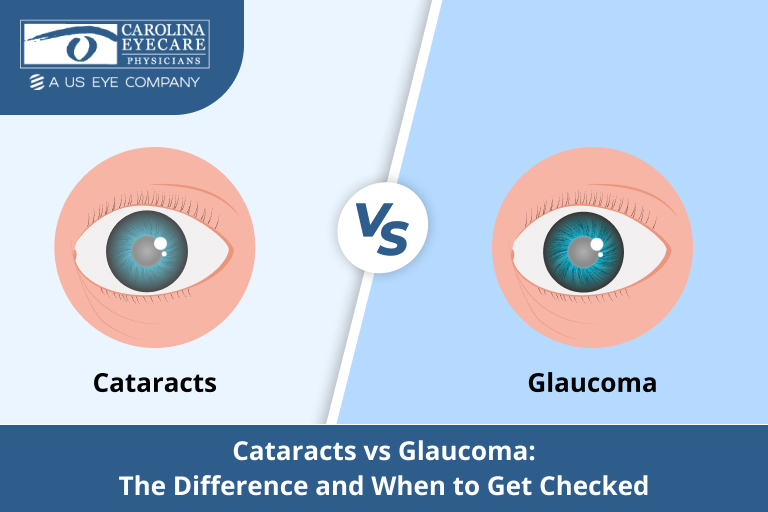
Reviewed By: Dr. Miliken Vision changes rarely announce themselves in a single dramatic moment. More often, it starts as a slight friction that builds. Headlights feel harsher at night. Print looks slightly softer. One eye seems to “do more work” than the other. Two of the most common causes of those shifts are cataracts and […]
Read More… from Cataracts vs Glaucoma: The Difference and When to Get Checked
Can You Get Laser Eye Surgery After Cataract Surgery? What Patients Should Know

Reviewed By: Dr. Reuther Many people see a big improvement after cataract surgery, then notice a change later. Sometimes vision gets hazy again months or years down the line. In other cases, the vision is clearer than before, but glasses still help with certain tasks. Depending on the cause, a laser procedure after cataract surgery […]
Read More… from Can You Get Laser Eye Surgery After Cataract Surgery? What Patients Should Know


We are a proud partner of US Eye, a leading group of patient-centric, vertically integrated multi-specialty physician practices providing patients with care in ophthalmology, optometry, dermatology, audiology, and cosmetic facial surgery.